by Zen Webnet | Sep 30, 2026 | In the news
By Tushar Gandhi and Anjali Batra
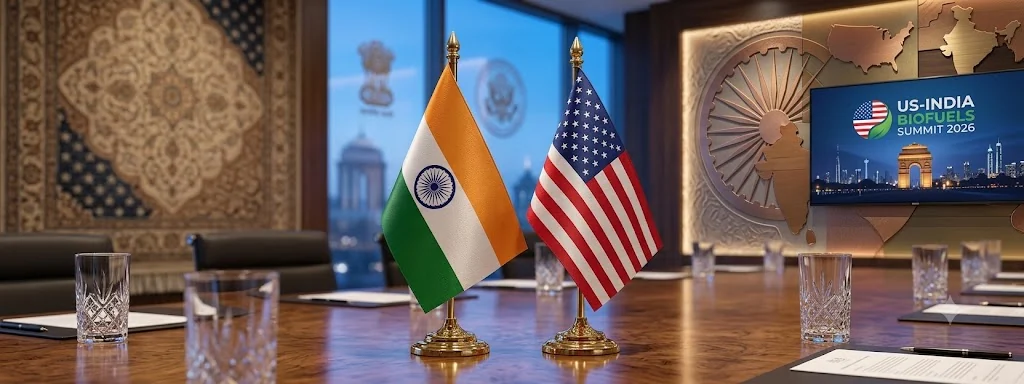
On 22 September 2026, the U.S. Grains & BioProducts Council (USGBC) and the U.S.-India Strategic Partnership Forum (USISPF) convened the U.S.-India Biofuels Summit 2026 in New Delhi. Building on earlier discussions around ethanol blending and feedstock diversification, the summit placed biofuels within a wider policy frame of energy security, rural value creation, industrial competitiveness, and hard-to-abate decarbonisation. India’s ethanol ecosystem is now being assessed not only by its ability to meet fuel blending targets but also by its capacity to support the country’s wider energy needs in sectors such as aviation, clean cooking, and maritime operations. Taking the discussion forward from its inaugural edition in 2024, which identified applications in sustainable aviation fuel (SAF) and clean cooking, this year’s dialogue focused on bringing stakeholders together to discuss implementation roadmaps.
India’s Ethanol Blending Programme (EBP) has created the underlying production, storage, and distribution foundation for this next phase. Blending rates surged from a modest 0.6 percent in 2012–13 to 10 percent in 2022, culminating in the nationwide rollout and consistent 20 percent blending (E20) by 2026. Backing this transformation is an installed distillation capacity of 24 billion litres, producing nearly 20 billion litres of ethanol annually. With E20 fuel blending absorbing approximately 12 to 13 billion litres, India now possesses a domestic surplus for other applications. The policy challenge is therefore shifting from building capacity to directing available resources towards applications that provide the greatest combination of energy security and carbon emission reductions.
Beyond surface transport, SAF emerged as a central pillar of the summit’s agenda. India is currently the world’s third-largest domestic aviation market, with fleet and passenger traffic expected to roughly quadruple by 2040. As international aviation faces progressively stronger carbon-accounting and fuel-intensity requirements, SAF is becoming a strategic issue for airlines, refiners, airports, and fuel suppliers rather than a niche climate intervention. To meet impending decarbonisation mandates, India is uniquely positioned to pursue the Alcohol-to-Jet (ATJ) pathway, capitalising on its domestic ethanol surplus. Representatives from the aviation industry at the summit showcased significant technical milestones, including recent successful SAF demonstration flights conducted with Indian carriers and research institutions. However, bridging the capital expenditure hurdle—with a domestic ATJ facility requiring around ₹3,500 crore—and aligning with international carbon-accounting standards will be vital to making commercial SAF supply cost-competitive by the end of the decade.
Building on these themes, a dedicated panel co-convened by the Global Biofuels Alliance (GBA) focused on the alternative and viable utilisation of surplus domestic ethanol as an immediate, transformative opportunity in the clean cooking segment. With volatile international energy markets continuing to disrupt imported commercial LPG supplies, ethanol provides a reliable, domestically refined solution. Global deployment models, particularly across East Africa, successfully demonstrated the commercial appeal of this fuel. In countries like Kenya and Uganda, early ethanol distribution networks rapidly scaled to over a million households by offering a clean alternative up to 40 percent cheaper than traditional charcoal.
India’s superior distillery infrastructure and extensive oil marketing distribution reach give it a structural advantage to implement bioethanol cooking on a national scale. Transitioning commercial kitchens, street vendors, and institutional canteens to ethanol insulates businesses from import shocks. Furthermore, creating a fuel-agnostic clean cooking policy framework would unlock affordable clean cooking for low-income and migrant households while generating assured demand for domestic farmers.
The summit also turned its attention to a new frontier – Sustainable Marine Fuel. The International Maritime Organization (IMO) has introduced its Net-Zero Framework, mandating stringent Greenhouse Gas Fuel Intensity benchmarks for large vessels starting in the coming years. With alternative fuels currently making up barely 2 percent of the global marine mix, ethanol is emerging as a practical, high-volume alternative to help ship operators comply with international emission norms. Backed by significant funding allocations under the Maritime India Vision 2030 and Amrit Kaal Vision 2047, India has an opportunity to develop green bunkering and alternative fuel logistics across its primary ports.
Ultimately, the U.S.-India Biofuels Summit 2026 underscored that India has moved past the stage of proving whether ethanol works. With world-class distillation capacity in place and proven technology across aviation, cooking, and marine transport, the focus now pivots to decisive policy execution. By formalising regulatory frameworks and enabling cross-sectoral adoption, India is well-positioned to accelerate its transition into a global clean energy powerhouse.
by Zen Webnet | Sep 18, 2026 | BLOG, In the news
New Delhi, 18 September 2026
By Anjali Batra
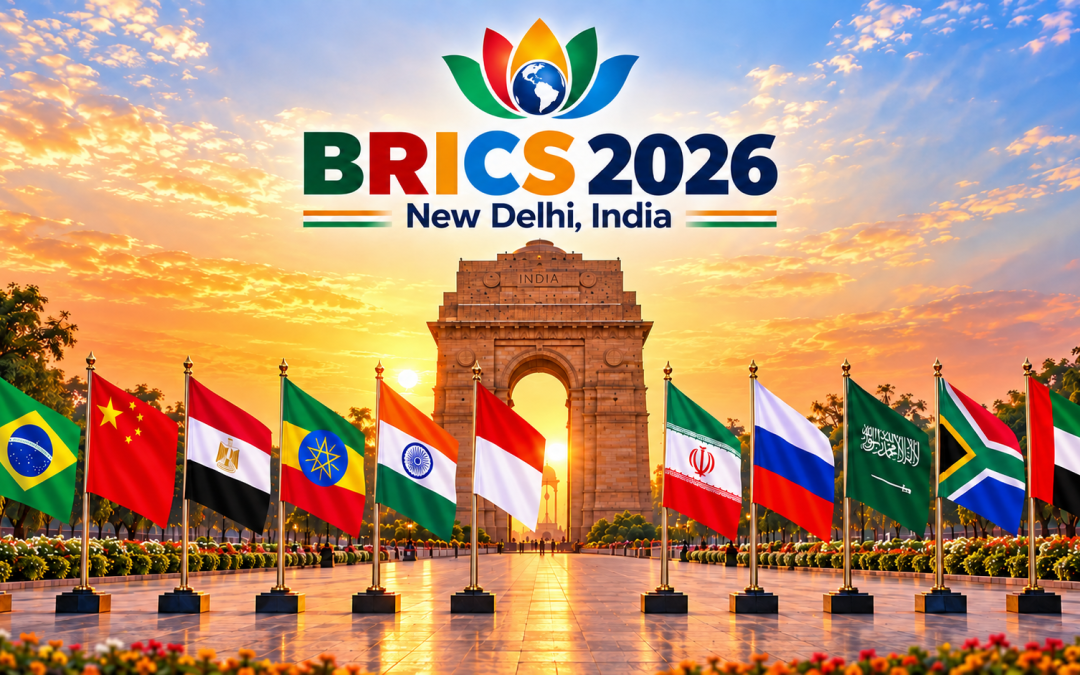
The XVIIIth BRICS Summit wrapped up on 13 September with the New Delhi Declaration, themed “Building for Resilience, Innovation, Cooperation and Sustainability.” BRICS began as BRIC, a Goldman Sachs acronym in 2001 and became a diplomatic platform at the first summit in Yekaterinburg in 2009. It now counts eleven members: the founding five (Brazil, Russia, India, China and South Africa), followed by Egypt, Ethiopia, Iran and the United Arab Emirates, Indonesia, and Saudi Arabia. Ten additional countries, including Nigeria, Vietnam, Kazakhstan, and Malaysia, attended as partner countries.
Twenty Years On: The Growth of the Bloc
BRICS turned twenty this year. By IMF estimates, the bloc now commands roughly 39.8% of global GDP in purchasing-power terms against the G7’s 27.9%, accounts for about a quarter of global trade, and represents close to half of humanity. The Declaration’s language on UN reform, IMF quota realignment and WTO revival reflected a strong rhetoric as the Global South is actively laying the groundwork to build a distinct class of decision-makers.
Over the past two decades, BRICS has evolved through clear phases:
- 2006: Officially formalized as a diplomatic and geopolitical entity on the sidelines of the UN General Assembly in New York.
- 2009: Transitioned from ministerial-level dialogues into a formal summit-level platform when the inaugural summit was held in Yekaterinburg, Russia, operating as a high-level diplomatic forum.
- 2014: Shifted to institution-building with the creation of the New Development Bank and the Contingent Reserve Arrangement.
- 2023-2025: Focused on expansion.
- 2026 (Under India’s Chairship): Evolved into a delivery-focused bloc, marked by more than four hundred meetings across thirty Indian cities and dedicated working groups.
The Submarine Cable Is the New Battleship
The Declaration officially recognised submarine cable infrastructure as an important foundation for international connectivity and network resilience. The Declaration and a dedicated Task Force concluded a “BRICS Cable Requirements: Directive Brief” and member states agreed to pursue a Technical and Economic Feasibility Study for a high-speed BRICS submarine cable network.
This initiative is vital because roughly 99% of the world’s intercontinental data travels along about 550–570 active undersea cables protected primarily by international law. In 2024, accidents and damage in the Red Sea snapped multiple cables simultaneously, disrupting traffic between Asia and Europe. This exceptionally rare incident knocked out approximately 25% of Asia-Europe-Middle East traffic and visibly degraded internet service in India. With tech giants like Google, Meta, Amazon, and Microsoft now commanding an estimated 75% of international subsea bandwidth (up from under 10% in 2010), a BRICS cable would serve as a strategic safeguard and offer sovereign fiber insurance and seabed security as shared responsibility, where cloud infrastructure is concentrated among major technology providers.
Cybersecurity and Financial Defenses
The bloc emphasized a ‘sovereign and self-reliant digital ecosystem’, to combat cybercrime, malicious software and deepfakes while urging members to ratify the UN Convention against Cybercrime. The cybersecurity agenda outlined the following measures:
- Urged members to sign and ratify the UN Convention against Cybercrime: the Russia-born treaty adopted by consensus in December 2024 and opened for signature in Hanoi last October. Only three countries have ratified it so far (Qatar, Azerbaijan, Vietnam), BRICS endorsement is meant to move the needle.
- Operationalised the BRICS Rapid Information Security Channel (BRISC): a crisis hotline for financial cyber events;
- Committed to annual BRICS cyber exercises and drills, and a central-bank capacity-building hub, to address quantum computing risks in finance; and
- Targeted the cross-border fraud factories of Southeast Asia (see also the USCC’s findings) that have targeted Indian savings accounts.
During the cybercrime Convention’s negotiations, India advocated for streamlining human-rights guardrails, thus, a sovereignty-first instinct sat beside the Declaration’s democratic multilateralism. This focus on national security and digital sovereignty is accentuated by acute domestic vulnerabilities. CERT-In handled 29.44 lakh cyber incidents in 2025 (roughly eleven attempted attacks every second) with banking, energy and transport among the most-targeted sectors.
Mobility, Aviation & Logistics
Members strongly advocated for Sustainable Aviation Fuels (SAF) and other low-carbon fuels to cut international flight emissions and proposed a new BRICS Forum on SAF for knowledge exchange and coordination between member states. As the world’s third-largest domestic aviation market, India mandated a 1% sustainable aviation fuel (SAF) blending requirement on international flights starting in 2027. SAF involves feedstock, refining, and price support, which is the type of complex technical transition in an area in which Indian industry has relevant capabilities. Furthermore, there is a clear strategic parallel in maritime transit: the Red Sea region that hosts damaged data cables also experiences vessel rerouting. When a single waterway has the potential to disrupt data and fuel supplies, infrastructure resilience transitions from a theoretical concept to national policy.
A formal ‘Logistics Supply-Chain Cooperation Framework’ was introduced with an aim to strengthen cross-border supply chains, reduce freight costs and improve interoperability and resilience among emerging markets.
What It Means for India
For Indian industry, the summit’s outcomes translate into a few clear priorities across sectors. In telecom and cloud, the upcoming feasibility study will be defining details around landing-station policies, repair capacities, and data-localization rules will determine if sovereign fiber can become a strategic asset.
In aviation and energy, Sustainable Aviation Fuel (SAF) mandates, feedstock auctions, and joint certification standards mean domestic refiners and suppliers could start to prepare early.
Within financial services, participation in the BRICS Rapid Information Security Channel, annual cyber drills, and quantum-readiness audits may become standard regulatory expectations.
Finally, for MSMEs and logistics, new invoice-discounting and credit-assessment initiatives may help ease working-capital pressures for exporters expanding across intra-BRICS trade lanes.
The Implementation Playbook
Looking ahead over the next twenty-four months, it will be interesting to see how these commitments transition into practical outcomes across several key areas. For digital infrastructure, the STI Steering Committee will table the feasibility study’s terms of reference for the subsea cable, focusing specifically on financing models and landing-station policies.
On cybersecurity, advancing the broader ratification of the cybercrime convention will require active domestic consultation with industry and civil society, alongside establishing named focal points and executing the first annual cyber exercise during China’s BRICS chairship in 2027 to test the framework’s credibility.
In transport and energy, closely tracking host institutions and pilot projects will determine whether initiatives like the sustainable aviation fuels forum translate into concrete results. Finally, ensuring institutional follow-through will be essential for Indian-authored deliverables, such as the proposed BRICS Risk Lab at GIFT City, which require active institutional backing.
Where the Baton Goes Next
To preserve and sustain the momentum, Prime Minister Modi proposed a “BRICS Continuity and Implementation Mechanism” to track progress. As China prepares to host the upcoming XIX Summit in 2027, Beijing will inherit an active workstream ranging from the cable feasibility study and payment-systems plumbing to the sustainable aviation fuels forum and AI governance statements. While international policy analysts and financial commentators note potential challenges regarding internal consensus and geopolitical rivalries, New Delhi’s successful hosting demonstrated that an expanded BRICS can effectively align on key economic and technical priorities. Thus, twenty years on, BRICS has moved beyond high-level diplomatic discussions to focus on practical redundancy and infrastructure resilience.
References

by | Aug 4, 2026 | In the news
India’s EV opportunity depends on moving beyond assembly to owning critical technologies such as battery cells, motors, software and platform architecture.
by Zen Webnet | Jul 21, 2026 | BLOG, In the news
New Delhi, 21 July 2026
By Teekshna Singh
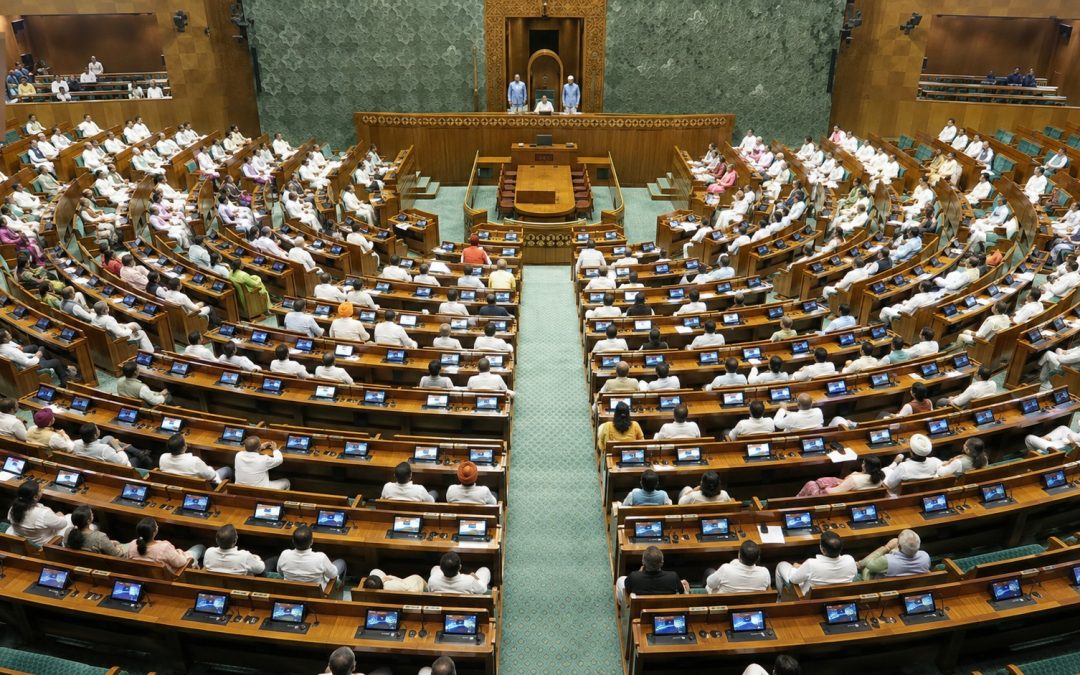
The Monsoon Session of Parliament commenced on July 20, 2026, and will continue until August 13, 2026, providing lawmakers with four weeks and 19 sittings to consider a wide-ranging legislative agenda. As one of the three annual sessions of Parliament, alongside the Budget and Winter Sessions, the Monsoon Session serves as a key platform for the introduction, debate, and passage of legislation.
Ahead of the commencement of the session, Prime Minister Narendra Modi called upon all political parties to ensure a productive session focused on legislative business and public welfare. However, proceedings in both Houses witnessed repeated disruptions on the opening day as Opposition parties sought discussions on issues including NEET, the Ram Mandir donation controversy, and other matters of public importance.
The government has prioritised the introduction and consideration of several significant Bills during the session while also preparing to deliberate on broader governance and policy issues expected to feature prominently in parliamentary discussions.
Legislative Agenda
At the start of the session, 28 Bills are pending before Parliament. Of these, the government has identified seven priority Bills, comprising five new legislations and two Bills carried over from previous sessions.
The Income Tax (Amendment) Bill, 2026 seeks to replace an ordinance exempting foreign investors from paying tax on interest and capital gains earned through investments in government securities. The proposed legislation also extends these exemptions to the Bank for International Settlements (BIS) and aims to attract foreign capital, strengthening India’s bond market, and improving financial stability amid global economic uncertainty.
The Supreme Court (Number of Judges) Amendment Bill, 2026 proposes to replace the ordinance issued in May 2026 that increased the sanctioned strength of the Supreme Court from 34 to 38 judges, including the Chief Justice of India. The amendment seeks to enhance the Court’s capacity to address its growing caseload.
The Registration of Births and Deaths (Amendment) Bill, 2026 proposes to modernise and digitise the country’s civil registration framework by streamlining the process for recording births and deaths.
The Prevention of Insults to National Honour (Amendment) Bill, 2026 seeks to amend the 1971 Act by extending legal protection currently available to the National Anthem to the National Song, Vande Mataram. The Bill proposes that insulting or intentionally obstructing the singing of the National Song would constitute an offence punishable with imprisonment of up to three years, a fine, or both.
The Micro, Small and Medium Enterprises Development (Amendment) Bill, 2026 aims to update the 2006 MSME law to reflect the contemporary business environment. It seeks to strengthen the mechanism for addressing delayed payments to small businesses, facilitate the enforcement of arbitration awards, and provide States with greater flexibility in establishing Facilitation Councils, with the broader objective of improving the ease of doing business for MSMEs.
The Foreign Contribution (Regulation) Amendment Bill, 2026 introduces provisions governing the handling and management of foreign funds and assets held by organisations whose FCRA registrations have been cancelled. It also proposes reducing the maximum imprisonment for certain violations from five years to one year.
The Viksit Bharat Shiksha Adhishthan Bill, 2025, which was introduced during the Winter Session and later referred to a Joint Parliamentary Committee, proposes the creation of a unified higher education regulator by merging the University Grants Commission (UGC), the All India Council for Technical Education (AICTE), and the National Council for Teacher Education (NCTE).
Constitutional Amendment
Apart from the legislative agenda, Parliament is also expected to deliberate on the 130th Constitution Amendment Bill, which has attracted considerable attention. The proposed amendment provides for the automatic removal of a Prime Minister, Chief Minister, or Minister who remains under judicial custody for 30 consecutive days. A Joint Parliamentary Committee met on July 17 to finalise its report ahead of the Monsoon Session, paving the way for further parliamentary consideration. However, the government has yet to confirm whether a revised version of the Bill will be introduced during the upcoming session.
Parliamentary Priorities
An all-party meeting was convened ahead of the session to discuss the government’s legislative programme and facilitate coordination among political parties. Alongside the introduction and passage of Bills, the session is expected to witness discussions on governance, judicial reforms, education policy, taxation, economic development, and constitutional accountability.
With 19 sittings scheduled over four weeks, the Monsoon Session 2026 is expected to serve as an important platform for legislative action and political debate. The fate of several key Bills, along with the proposed constitutional amendment, will depend on parliamentary deliberations and consensus across both Houses during the course of the session.
by Zen Webnet | Jul 10, 2026 | BLOG, In the news
New Delhi, 10 July 2026
By Teekshna Singh
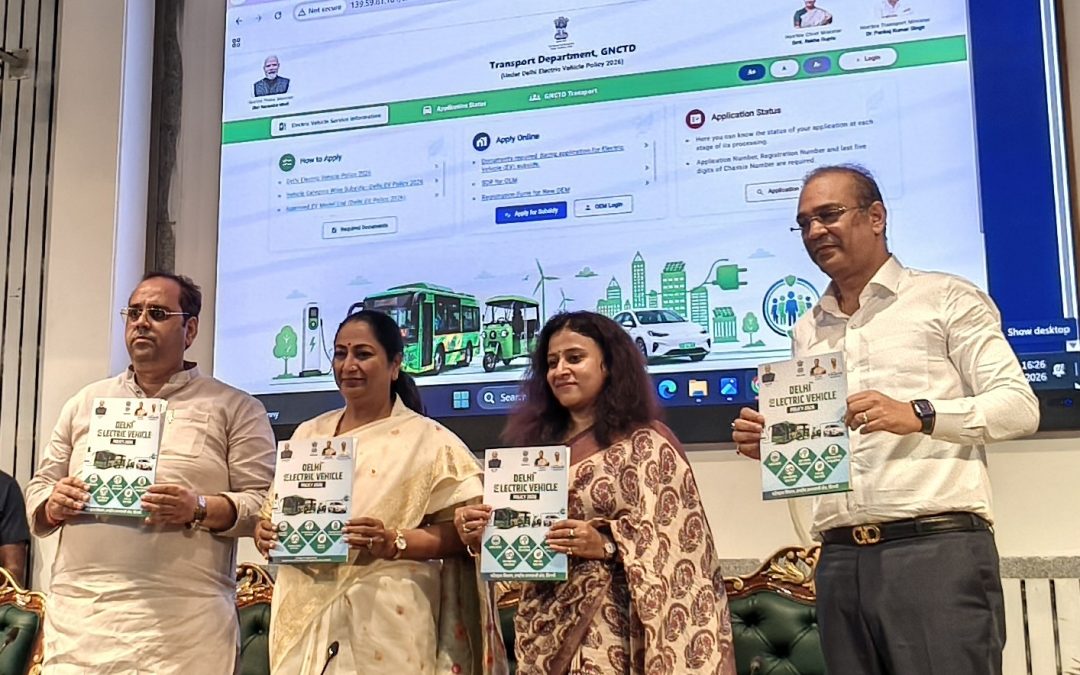
The Government of NCT of Delhi (GNCTD) officially notified the ‘Delhi Electric Vehicle Policy, 2026’, effective from July 1, 2026, to March 31, 2030. The landmark policy comes against the backdrop of a CAQM (Commission for Air Quality Management) report that identified vehicular pollution as the primary contributor, accounting for 23% during winters in Delhi. Importantly, the report highlighted that two-wheelers constituted approximately 67% of the total number of vehicles in Delhi, making a case for their rapid electrification to achieve a reduction in emissions.
To be implemented over four years, the policy aims to accelerate electric vehicle adoption across the capital, including both fixed and swappable batteries. Managed by the Transport Department, the policy will have a fully digital framework to deploy direct purchase incentives, scrapping subsidies, phased electrification mandates, and a comprehensive public charging network.
The policy aims to increase EV adoption in key automotive categories, establish an extensive public and private charging network, and facilitate a strong EV supply chain that includes component recovery, battery recycling, and servicing.
Vehicle Categories Covered
In the NCT of Delhi, new registrations for Three-Wheeler Auto-Rickshaws (L5M) and Four-Wheeler Goods Vehicles (N1) would need to be exclusively electric starting January 1, 2027. This mandatory electrification will also apply to all new two-wheeler registrations beginning April 1, 2028. Delhi schools are required to transition their bus fleets to electric vehicles, achieving a 10% share by year two, 20% by year three, and 30% by March 31, 2030.
A Model Approval Committee under the Transport Department is given the responsibility to empanel eligible EV models across vehicle segments for availing incentives under the Policy, with OEMs and manufacturers required to register. During stakeholder consultations, the Commissioner of the Transport Department noted that indigenous manufacturing is being promoted.
Incentive Structure
The GNCTD shall provide incentives to promote electric vehicle adoption in the NCT of Delhi. For Electric Two-Wheelers, the incentives are ₹10,000 per kWh (max ₹30,000) in Year 1, ₹6,600 per kWh (max ₹20,000) in Year 2, and ₹3,300 per kWh (max ₹10,000) in Year 3. This applies to both plug-in and battery-swapping models. For Electric Three-Wheeler Auto-Rickshaws, the incentives are ₹50,000 in Year 1, ₹40,000 in Year 2, and ₹30,000 in Year 3. This applies to both plug-in and battery-swapping models with a battery capacity of more than 4 kWh. For Electric Four-Wheeler Goods Vehicles, the incentives are ₹1,00,000 for N1 above 1.75-ton GVW and ₹50,000 up to 1.75 tons GVW in Year 1. In Year 2, they are ₹75,000 and ₹37,500, respectively. In Year 3, they are ₹50,000 and ₹25,000, respectively.
Scrapping Incentives
Additionally, scrapping incentives are provided under the policy. Electric Two-Wheelers get ₹10,000 for scrapping a Delhi-registered BS-IV or below model when purchasing a new electric vehicle. Electric Three-Wheelers get ₹25,000 when upgrading from a Delhi-registered BS-IV or below model. Electric Cars (Non-Transport) get ₹1,00,000 for scrapping a Delhi-registered BS-IV or below car, provided the new car’s ex-showroom price does not exceed ₹30 lakh and the applicant is among the first 1,00,000 eligible buyers.
Electric Four-Wheeler Goods Carriers get ₹50,000 for scrapping a Delhi-registered BS-IV or below goods carrier. Finally, ₹15,000 is provided for scrapping a Delhi-registered Gramin Sewa vehicle, provided it is replaced with a new electric Gramin Sewa vehicle equipped with Li-ion or advanced battery technology. The first 1,000 privately-owned N2-category electric trucks (excluding government/municipal vehicles) purchased and registered in Delhi within three months of the Policy’s notification will be exempted from no-entry timing restrictions for 10 years from registration. All incentives would be disbursed via direct benefit transfer to buyers through a subsidy portal launched by the CM.
Additional Incentives
All electric vehicles purchased and registered in the NCT of Delhi during the policy period will be granted a 100% exemption from road tax for the vehicle’s life and from registration fees at the time of registration. For electric cars with an ex-showroom price up to ₹30 lakh, this 100% exemption from road tax and registration fees applies till March 31, 2030.
Charging Infrastructure
GNCTD will submit proposals under the PM E-Drive scheme and other Government of India schemes for funding support for charging and battery swapping infrastructure, and will allocate funds to the Power Department to expand public and community charging facilities. Delhi Transco Limited (DTL) shall be the nodal agency for planning, coordinating, and implementing public EV charging and battery swapping infrastructure in Delhi. DTL shall set up a single-window facility to enable faster clearances and expedited EV connections for charge point and battery swapping operators deploying public and semi-public charging stations in Delhi.
Battery Recycling
The policy also covers battery recycling for OEMs to comply with the Battery Waste Management Rules, 2022. The Delhi Pollution Control Committee, as the nodal department, will facilitate the deployment of battery collection centres across Delhi under a PPP model, in collaboration with authorised recyclers and other eligible entities, to enable convenient, accessible, and environmentally sound collection of waste batteries.
The Delhi EV Policy 2026 provides a clear plan for the city’s transition to electric transportation through a combination of purchase incentives, subsidies, tax exemptions, and assistance for charging infrastructure. The policy attempts to address vehicle pollution while creating a self-sustaining EV ecosystem in the capital by combining financial incentives with phased electrification requirements and a robust recycling structure.
by Zen Webnet | Jun 24, 2026 | BLOG, In the news
New Delhi, 24 June 2026
By Tushar Gandhi
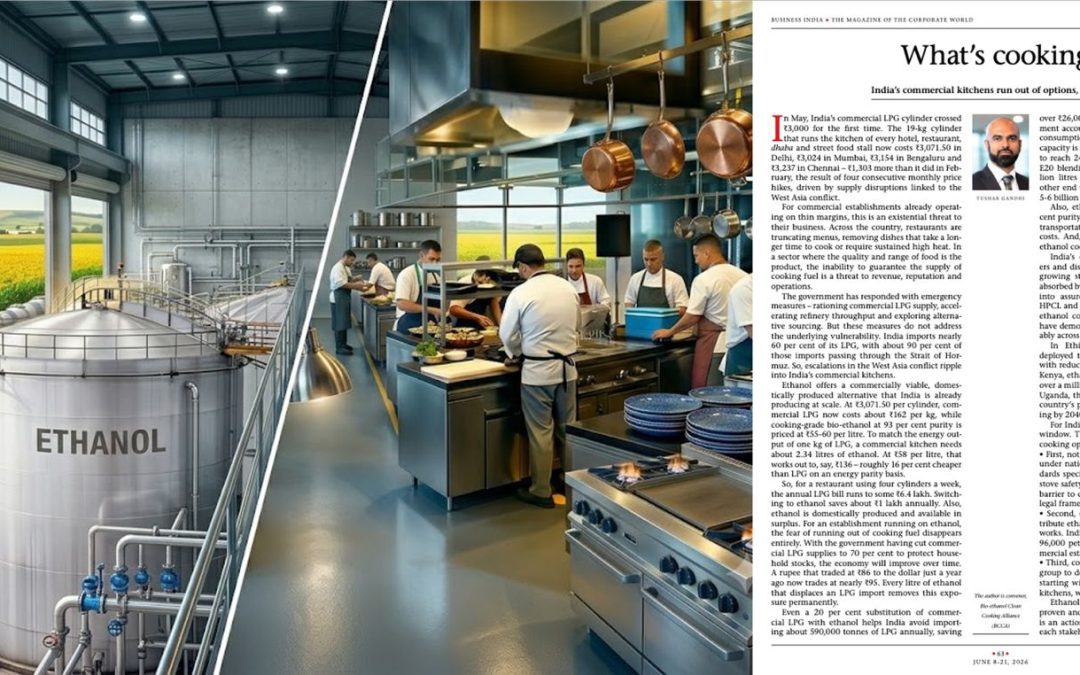
In May, India’s commercial LPG cylinder crossed Rs 3,000 for the first time. The 19-kg cylinder that runs the kitchen of every hotel, restaurant, dhaba, and street food stall now costs Rs 3,071.50 in Delhi, Rs 3,024 in Mumbai, Rs 3,154 in Bengaluru, and Rs 3,237 in Chennai. That is Rs 1,303 more than it did in February, the result of four consecutive monthly price hikes driven by supply disruptions linked to the West Asia conflict. For commercial establishments already operating on thin margins, this is not a passing inconvenience. It is an existential threat to their business.
Across the country, restaurants are truncating menus, removing dishes that take longer to cook or require sustained high heat. Hotels are unable to serve certain items entirely. In a sector where the quality and range of food is the product, the inability to guarantee supply of cooking fuel is a direct threat to revenue, reputation, and operations.
The government has responded with emergency measures – rationing commercial LPG supply, accelerating refinery throughput, and exploring alternative sourcing. While these are the right short-term responses, they do not address the underlying vulnerability. India imports nearly 60% of its LPG, with approximately 90% of those imports passing through the Strait of Hormuz. Every escalation in West Asia will ripple directly into India’s commercial kitchens.
Ethanol offers a commercially viable, domestically produced alternative that India is already producing at scale.
At Rs 3,071.50 per cylinder, commercial LPG now costs approximately Rs 162 per kg. Cooking-grade bioethanol at 93% purity is currently priced at Rs 55 to 60 per litre. To match the energy output of one kg of LPG, a commercial kitchen needs approximately 2.34 litres of ethanol. At Rs 58 per litre, that works out to approximately Rs 136, roughly 16% cheaper than LPG on an energy parity basis.
That 16% saving matters. For a restaurant using four cylinders a week, the annual LPG bill runs to approximately Rs 6.4 lakh. Switching to ethanol saves approximately Rs 1 lakh annually.
But cost is only part of the argument. Ethanol is domestically produced and available in surplus. A commercial establishment running on ethanol does not face the supply uncertainty that is currently forcing restaurants to turn away customers and shorten menus. The fear of running out of cooking fuel disappears entirely. With the government having already cut commercial LPG supplies to 70% to protect household stocks, this fear is the daily reality for commercial kitchens today.
The economics will only improve over time. A rupee that traded at Rs 86 to the dollar just a year ago now trades at nearly Rs 95, a depreciation of over 10% in twelve months alone. Every litre of ethanol that displaces an LPG import removes this exposure permanently.
At 20% substitution of commercial LPG with ethanol, India avoids importing approximately 590 thousand metric tonnes of LPG annually, saving over Rs 26,000 crore in foreign exchange from a segment accounting for just 9.4% of total LPG consumption.
India’s installed ethanol production capacity is 2,100 crore litres annually and is expected to reach 2,400 crore litres by the end of 2026. The E20 blending programme absorbs approximately 1,050 crore litres per year. Even accounting for all the other end uses like industrial and potable, there is surplus capacity of 500 to 600 crore litres, enough to serve millions of commercial establishments across the country.
Another advantage is that ethanol for cooking requires only 93% purity, compared to 99.5% required for transportation fuel blending, reducing production costs. The supply infrastructure for ethanol cooking exists today, without the need for additional investment, research, or time.
The benefits extend beyond commercial kitchens. India’s ethanol surplus is produced by farmers and distilleries across sugarcane and grain-growing states. Every additional litre of ethanol absorbed by the cooking segment translates directly into assured procurement demand for farmers, supporting rural incomes.
Ethanol cooking is not a new concept, and its viability is not untested. HPCL and IIT Guwahati have jointly developed an ethanol cookstove, and pilots conducted in India have demonstrated that the technology works reliably across diverse conditions.
Globally, the evidence is extensive. In Ethiopia, ethanol cookstoves have been deployed to thousands of households over more than a decade, with validated reductions in particulate matter emissions. In Kenya, pay-as-you-go ethanol distribution networks have reached over a million households across multiple cities at commercial scale. In Uganda, the government expects the majority of the country to be using ethanol for cooking by 2040.
India’s opportunity is structurally stronger than any of these markets, with surplus, existing distribution infrastructure, and a government mandate to reduce import dependence.
The current crisis has created a policy window. Three actions would unlock the ethanol cooking opportunity at commercial scale.
First, formally notify ethanol as an approved cooking fuel under national energy frameworks, with BIS standards specifying the 93% purity grade and stove safety requirements. This single regulatory action removes the largest barrier to commercial adoption, the absence of a legal framework for ethanol as a cooking fuel.
Second, enable oil marketing companies, HPCL, IOCL, and BPCL, to distribute ethanol through their existing commercial LPG networks. India has over 25,000 LPG distributors and 96,000 petrol retail outlets that already reach every commercial establishment in the country.
Third, constitute a government-industry working group to develop a structured commercial rollout framework, starting with hotels, restaurants, and institutional kitchens in cities where commercial LPG consumption is highest.
Ethanol is domestically produced, technically proven, and commercially viable today. India does not need another study. It needs a clear action plan with defined responsibilities for each stakeholder — government, OMCs, distilleries, and stove manufacturers
