by Zen Webnet | Jul 21, 2026 | BLOG, In the news
New Delhi, 21 July 2026
By Teekshna Singh
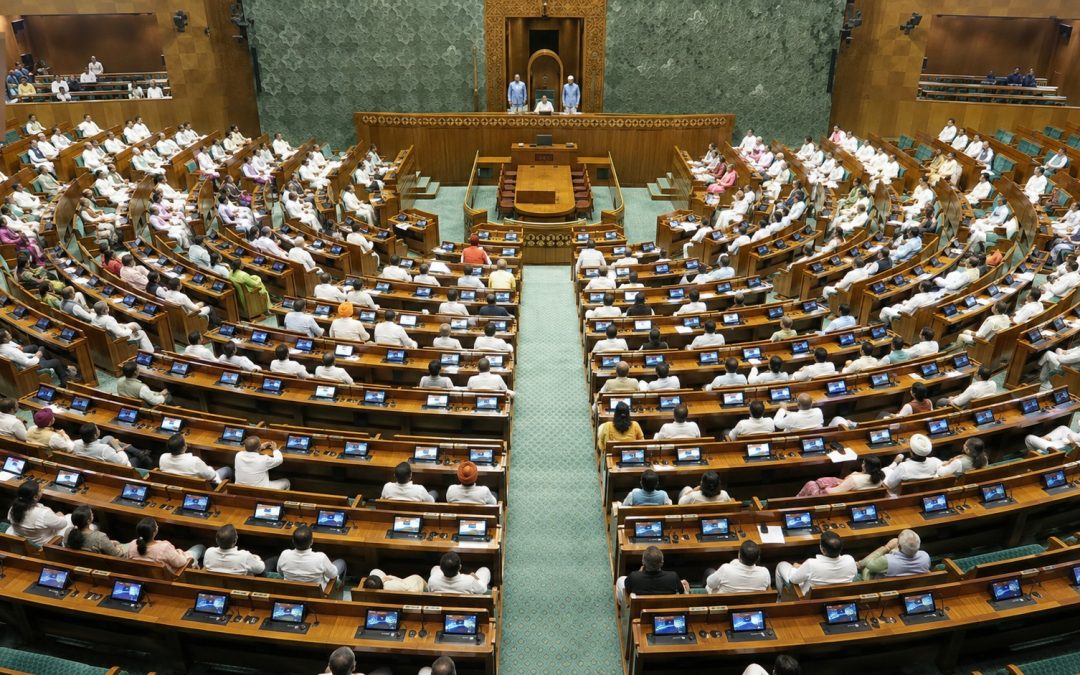
The Monsoon Session of Parliament commenced on July 20, 2026, and will continue until August 13, 2026, providing lawmakers with four weeks and 19 sittings to consider a wide-ranging legislative agenda. As one of the three annual sessions of Parliament, alongside the Budget and Winter Sessions, the Monsoon Session serves as a key platform for the introduction, debate, and passage of legislation.
Ahead of the commencement of the session, Prime Minister Narendra Modi called upon all political parties to ensure a productive session focused on legislative business and public welfare. However, proceedings in both Houses witnessed repeated disruptions on the opening day as Opposition parties sought discussions on issues including NEET, the Ram Mandir donation controversy, and other matters of public importance.
The government has prioritised the introduction and consideration of several significant Bills during the session while also preparing to deliberate on broader governance and policy issues expected to feature prominently in parliamentary discussions.
Legislative Agenda
At the start of the session, 28 Bills are pending before Parliament. Of these, the government has identified seven priority Bills, comprising five new legislations and two Bills carried over from previous sessions.
The Income Tax (Amendment) Bill, 2026 seeks to replace an ordinance exempting foreign investors from paying tax on interest and capital gains earned through investments in government securities. The proposed legislation also extends these exemptions to the Bank for International Settlements (BIS) and aims to attract foreign capital, strengthening India’s bond market, and improving financial stability amid global economic uncertainty.
The Supreme Court (Number of Judges) Amendment Bill, 2026 proposes to replace the ordinance issued in May 2026 that increased the sanctioned strength of the Supreme Court from 34 to 38 judges, including the Chief Justice of India. The amendment seeks to enhance the Court’s capacity to address its growing caseload.
The Registration of Births and Deaths (Amendment) Bill, 2026 proposes to modernise and digitise the country’s civil registration framework by streamlining the process for recording births and deaths.
The Prevention of Insults to National Honour (Amendment) Bill, 2026 seeks to amend the 1971 Act by extending legal protection currently available to the National Anthem to the National Song, Vande Mataram. The Bill proposes that insulting or intentionally obstructing the singing of the National Song would constitute an offence punishable with imprisonment of up to three years, a fine, or both.
The Micro, Small and Medium Enterprises Development (Amendment) Bill, 2026 aims to update the 2006 MSME law to reflect the contemporary business environment. It seeks to strengthen the mechanism for addressing delayed payments to small businesses, facilitate the enforcement of arbitration awards, and provide States with greater flexibility in establishing Facilitation Councils, with the broader objective of improving the ease of doing business for MSMEs.
The Foreign Contribution (Regulation) Amendment Bill, 2026 introduces provisions governing the handling and management of foreign funds and assets held by organisations whose FCRA registrations have been cancelled. It also proposes reducing the maximum imprisonment for certain violations from five years to one year.
The Viksit Bharat Shiksha Adhishthan Bill, 2025, which was introduced during the Winter Session and later referred to a Joint Parliamentary Committee, proposes the creation of a unified higher education regulator by merging the University Grants Commission (UGC), the All India Council for Technical Education (AICTE), and the National Council for Teacher Education (NCTE).
Constitutional Amendment
Apart from the legislative agenda, Parliament is also expected to deliberate on the 130th Constitution Amendment Bill, which has attracted considerable attention. The proposed amendment provides for the automatic removal of a Prime Minister, Chief Minister, or Minister who remains under judicial custody for 30 consecutive days. A Joint Parliamentary Committee met on July 17 to finalise its report ahead of the Monsoon Session, paving the way for further parliamentary consideration. However, the government has yet to confirm whether a revised version of the Bill will be introduced during the upcoming session.
Parliamentary Priorities
An all-party meeting was convened ahead of the session to discuss the government’s legislative programme and facilitate coordination among political parties. Alongside the introduction and passage of Bills, the session is expected to witness discussions on governance, judicial reforms, education policy, taxation, economic development, and constitutional accountability.
With 19 sittings scheduled over four weeks, the Monsoon Session 2026 is expected to serve as an important platform for legislative action and political debate. The fate of several key Bills, along with the proposed constitutional amendment, will depend on parliamentary deliberations and consensus across both Houses during the course of the session.
by Zen Webnet | Jul 10, 2026 | BLOG, In the news
New Delhi, 10 July 2026
By Teekshna Singh
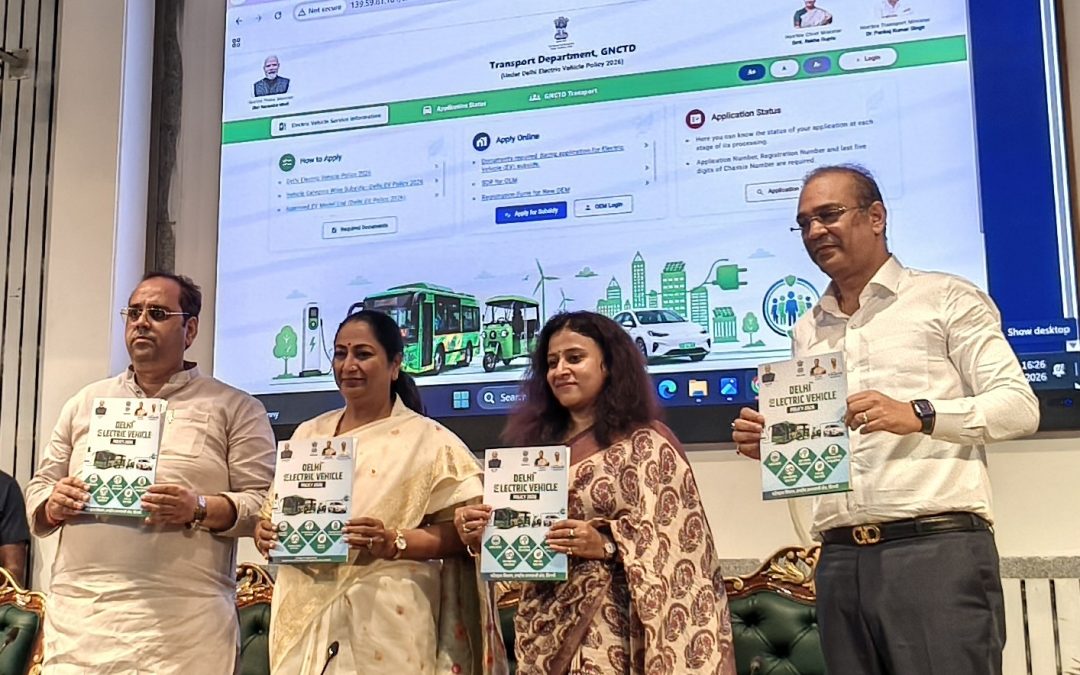
The Government of NCT of Delhi (GNCTD) officially notified the ‘Delhi Electric Vehicle Policy, 2026’, effective from July 1, 2026, to March 31, 2030. The landmark policy comes against the backdrop of a CAQM (Commission for Air Quality Management) report that identified vehicular pollution as the primary contributor, accounting for 23% during winters in Delhi. Importantly, the report highlighted that two-wheelers constituted approximately 67% of the total number of vehicles in Delhi, making a case for their rapid electrification to achieve a reduction in emissions.
To be implemented over four years, the policy aims to accelerate electric vehicle adoption across the capital, including both fixed and swappable batteries. Managed by the Transport Department, the policy will have a fully digital framework to deploy direct purchase incentives, scrapping subsidies, phased electrification mandates, and a comprehensive public charging network.
The policy aims to increase EV adoption in key automotive categories, establish an extensive public and private charging network, and facilitate a strong EV supply chain that includes component recovery, battery recycling, and servicing.
Vehicle Categories Covered
In the NCT of Delhi, new registrations for Three-Wheeler Auto-Rickshaws (L5M) and Four-Wheeler Goods Vehicles (N1) would need to be exclusively electric starting January 1, 2027. This mandatory electrification will also apply to all new two-wheeler registrations beginning April 1, 2028. Delhi schools are required to transition their bus fleets to electric vehicles, achieving a 10% share by year two, 20% by year three, and 30% by March 31, 2030.
A Model Approval Committee under the Transport Department is given the responsibility to empanel eligible EV models across vehicle segments for availing incentives under the Policy, with OEMs and manufacturers required to register. During stakeholder consultations, the Commissioner of the Transport Department noted that indigenous manufacturing is being promoted.
Incentive Structure
The GNCTD shall provide incentives to promote electric vehicle adoption in the NCT of Delhi. For Electric Two-Wheelers, the incentives are ₹10,000 per kWh (max ₹30,000) in Year 1, ₹6,600 per kWh (max ₹20,000) in Year 2, and ₹3,300 per kWh (max ₹10,000) in Year 3. This applies to both plug-in and battery-swapping models. For Electric Three-Wheeler Auto-Rickshaws, the incentives are ₹50,000 in Year 1, ₹40,000 in Year 2, and ₹30,000 in Year 3. This applies to both plug-in and battery-swapping models with a battery capacity of more than 4 kWh. For Electric Four-Wheeler Goods Vehicles, the incentives are ₹1,00,000 for N1 above 1.75-ton GVW and ₹50,000 up to 1.75 tons GVW in Year 1. In Year 2, they are ₹75,000 and ₹37,500, respectively. In Year 3, they are ₹50,000 and ₹25,000, respectively.
Scrapping Incentives
Additionally, scrapping incentives are provided under the policy. Electric Two-Wheelers get ₹10,000 for scrapping a Delhi-registered BS-IV or below model when purchasing a new electric vehicle. Electric Three-Wheelers get ₹25,000 when upgrading from a Delhi-registered BS-IV or below model. Electric Cars (Non-Transport) get ₹1,00,000 for scrapping a Delhi-registered BS-IV or below car, provided the new car’s ex-showroom price does not exceed ₹30 lakh and the applicant is among the first 1,00,000 eligible buyers.
Electric Four-Wheeler Goods Carriers get ₹50,000 for scrapping a Delhi-registered BS-IV or below goods carrier. Finally, ₹15,000 is provided for scrapping a Delhi-registered Gramin Sewa vehicle, provided it is replaced with a new electric Gramin Sewa vehicle equipped with Li-ion or advanced battery technology. The first 1,000 privately-owned N2-category electric trucks (excluding government/municipal vehicles) purchased and registered in Delhi within three months of the Policy’s notification will be exempted from no-entry timing restrictions for 10 years from registration. All incentives would be disbursed via direct benefit transfer to buyers through a subsidy portal launched by the CM.
Additional Incentives
All electric vehicles purchased and registered in the NCT of Delhi during the policy period will be granted a 100% exemption from road tax for the vehicle’s life and from registration fees at the time of registration. For electric cars with an ex-showroom price up to ₹30 lakh, this 100% exemption from road tax and registration fees applies till March 31, 2030.
Charging Infrastructure
GNCTD will submit proposals under the PM E-Drive scheme and other Government of India schemes for funding support for charging and battery swapping infrastructure, and will allocate funds to the Power Department to expand public and community charging facilities. Delhi Transco Limited (DTL) shall be the nodal agency for planning, coordinating, and implementing public EV charging and battery swapping infrastructure in Delhi. DTL shall set up a single-window facility to enable faster clearances and expedited EV connections for charge point and battery swapping operators deploying public and semi-public charging stations in Delhi.
Battery Recycling
The policy also covers battery recycling for OEMs to comply with the Battery Waste Management Rules, 2022. The Delhi Pollution Control Committee, as the nodal department, will facilitate the deployment of battery collection centres across Delhi under a PPP model, in collaboration with authorised recyclers and other eligible entities, to enable convenient, accessible, and environmentally sound collection of waste batteries.
The Delhi EV Policy 2026 provides a clear plan for the city’s transition to electric transportation through a combination of purchase incentives, subsidies, tax exemptions, and assistance for charging infrastructure. The policy attempts to address vehicle pollution while creating a self-sustaining EV ecosystem in the capital by combining financial incentives with phased electrification requirements and a robust recycling structure.
