
New Delhi, 21 July 2026
By Teekshna Singh
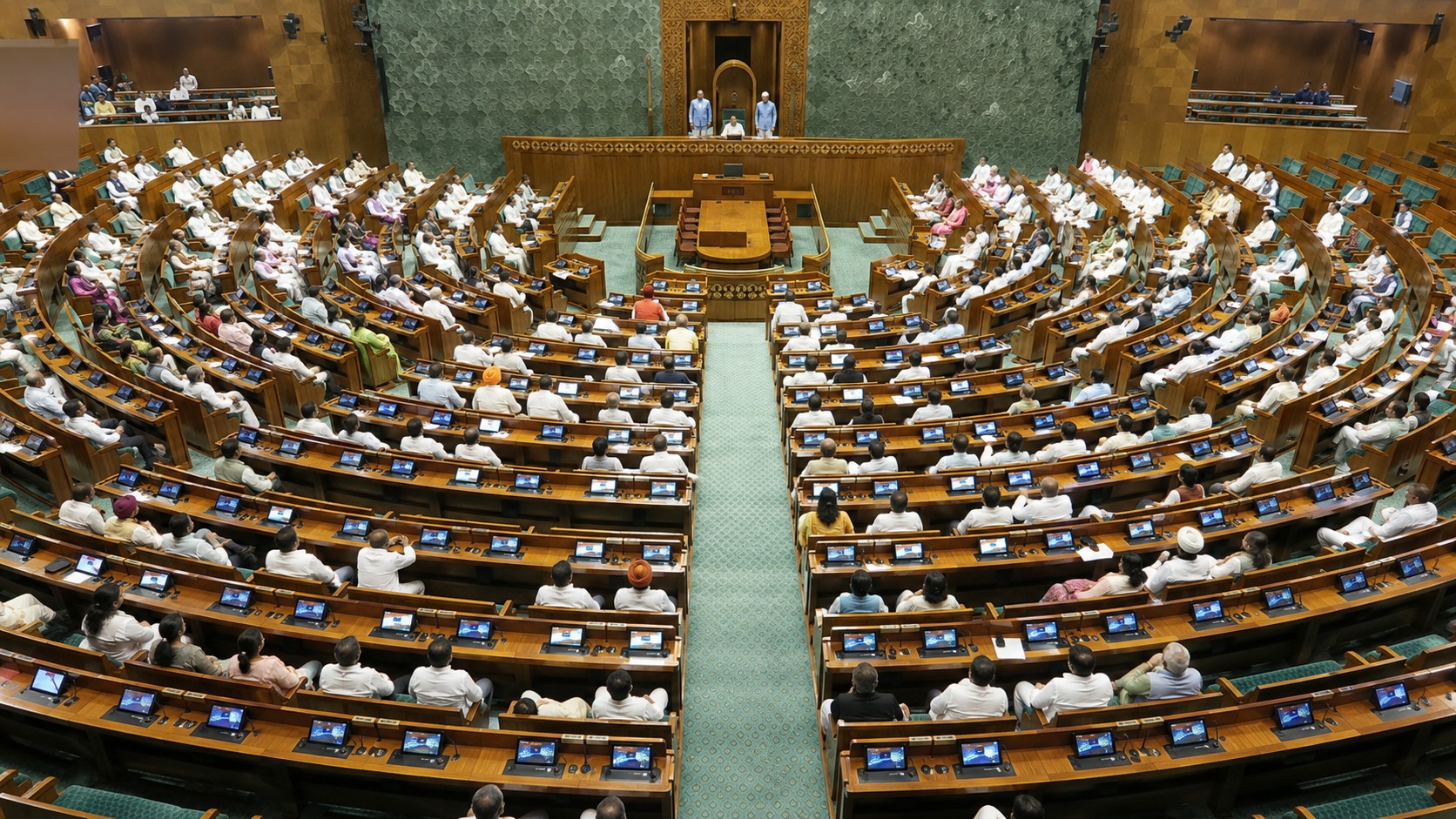
The Monsoon Session of Parliament commenced on July 20, 2026, and will continue until August 13, 2026, providing lawmakers with four weeks and 19 sittings to consider a wide-ranging legislative agenda. As one of the three annual sessions of Parliament, alongside the Budget and Winter Sessions, the Monsoon Session serves as a key platform for the introduction, debate, and passage of legislation.
Ahead of the commencement of the session, Prime Minister Narendra Modi called upon all political parties to ensure a productive session focused on legislative business and public welfare. However, proceedings in both Houses witnessed repeated disruptions on the opening day as Opposition parties sought discussions on issues including NEET, the Ram Mandir donation controversy, and other matters of public importance.
The government has prioritised the introduction and consideration of several significant Bills during the session while also preparing to deliberate on broader governance and policy issues expected to feature prominently in parliamentary discussions.
Legislative Agenda
At the start of the session, 28 Bills are pending before Parliament. Of these, the government has identified seven priority Bills, comprising five new legislations and two Bills carried over from previous sessions.
The Income Tax (Amendment) Bill, 2026 seeks to replace an ordinance exempting foreign investors from paying tax on interest and capital gains earned through investments in government securities. The proposed legislation also extends these exemptions to the Bank for International Settlements (BIS) and aims to attract foreign capital, strengthening India’s bond market, and improving financial stability amid global economic uncertainty.
The Supreme Court (Number of Judges) Amendment Bill, 2026 proposes to replace the ordinance issued in May 2026 that increased the sanctioned strength of the Supreme Court from 34 to 38 judges, including the Chief Justice of India. The amendment seeks to enhance the Court’s capacity to address its growing caseload.
The Registration of Births and Deaths (Amendment) Bill, 2026 proposes to modernise and digitise the country’s civil registration framework by streamlining the process for recording births and deaths.
The Prevention of Insults to National Honour (Amendment) Bill, 2026 seeks to amend the 1971 Act by extending legal protection currently available to the National Anthem to the National Song, Vande Mataram. The Bill proposes that insulting or intentionally obstructing the singing of the National Song would constitute an offence punishable with imprisonment of up to three years, a fine, or both.
The Micro, Small and Medium Enterprises Development (Amendment) Bill, 2026 aims to update the 2006 MSME law to reflect the contemporary business environment. It seeks to strengthen the mechanism for addressing delayed payments to small businesses, facilitate the enforcement of arbitration awards, and provide States with greater flexibility in establishing Facilitation Councils, with the broader objective of improving the ease of doing business for MSMEs.
The Foreign Contribution (Regulation) Amendment Bill, 2026 introduces provisions governing the handling and management of foreign funds and assets held by organisations whose FCRA registrations have been cancelled. It also proposes reducing the maximum imprisonment for certain violations from five years to one year.
The Viksit Bharat Shiksha Adhishthan Bill, 2025, which was introduced during the Winter Session and later referred to a Joint Parliamentary Committee, proposes the creation of a unified higher education regulator by merging the University Grants Commission (UGC), the All India Council for Technical Education (AICTE), and the National Council for Teacher Education (NCTE).
Constitutional Amendment
Apart from the legislative agenda, Parliament is also expected to deliberate on the 130th Constitution Amendment Bill, which has attracted considerable attention. The proposed amendment provides for the automatic removal of a Prime Minister, Chief Minister, or Minister who remains under judicial custody for 30 consecutive days. A Joint Parliamentary Committee met on July 17 to finalise its report ahead of the Monsoon Session, paving the way for further parliamentary consideration. However, the government has yet to confirm whether a revised version of the Bill will be introduced during the upcoming session.
Parliamentary Priorities
An all-party meeting was convened ahead of the session to discuss the government’s legislative programme and facilitate coordination among political parties. Alongside the introduction and passage of Bills, the session is expected to witness discussions on governance, judicial reforms, education policy, taxation, economic development, and constitutional accountability.
With 19 sittings scheduled over four weeks, the Monsoon Session 2026 is expected to serve as an important platform for legislative action and political debate. The fate of several key Bills, along with the proposed constitutional amendment, will depend on parliamentary deliberations and consensus across both Houses during the course of the session.