by Zen Webnet | Sep 30, 2026 | In the news
By Tushar Gandhi and Anjali Batra
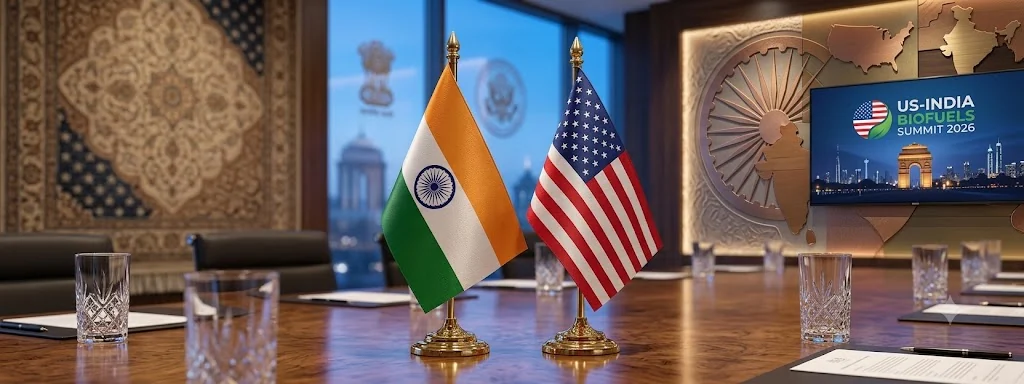
On 22 September 2026, the U.S. Grains & BioProducts Council (USGBC) and the U.S.-India Strategic Partnership Forum (USISPF) convened the U.S.-India Biofuels Summit 2026 in New Delhi. Building on earlier discussions around ethanol blending and feedstock diversification, the summit placed biofuels within a wider policy frame of energy security, rural value creation, industrial competitiveness, and hard-to-abate decarbonisation. India’s ethanol ecosystem is now being assessed not only by its ability to meet fuel blending targets but also by its capacity to support the country’s wider energy needs in sectors such as aviation, clean cooking, and maritime operations. Taking the discussion forward from its inaugural edition in 2024, which identified applications in sustainable aviation fuel (SAF) and clean cooking, this year’s dialogue focused on bringing stakeholders together to discuss implementation roadmaps.
India’s Ethanol Blending Programme (EBP) has created the underlying production, storage, and distribution foundation for this next phase. Blending rates surged from a modest 0.6 percent in 2012–13 to 10 percent in 2022, culminating in the nationwide rollout and consistent 20 percent blending (E20) by 2026. Backing this transformation is an installed distillation capacity of 24 billion litres, producing nearly 20 billion litres of ethanol annually. With E20 fuel blending absorbing approximately 12 to 13 billion litres, India now possesses a domestic surplus for other applications. The policy challenge is therefore shifting from building capacity to directing available resources towards applications that provide the greatest combination of energy security and carbon emission reductions.
Beyond surface transport, SAF emerged as a central pillar of the summit’s agenda. India is currently the world’s third-largest domestic aviation market, with fleet and passenger traffic expected to roughly quadruple by 2040. As international aviation faces progressively stronger carbon-accounting and fuel-intensity requirements, SAF is becoming a strategic issue for airlines, refiners, airports, and fuel suppliers rather than a niche climate intervention. To meet impending decarbonisation mandates, India is uniquely positioned to pursue the Alcohol-to-Jet (ATJ) pathway, capitalising on its domestic ethanol surplus. Representatives from the aviation industry at the summit showcased significant technical milestones, including recent successful SAF demonstration flights conducted with Indian carriers and research institutions. However, bridging the capital expenditure hurdle—with a domestic ATJ facility requiring around ₹3,500 crore—and aligning with international carbon-accounting standards will be vital to making commercial SAF supply cost-competitive by the end of the decade.
Building on these themes, a dedicated panel co-convened by the Global Biofuels Alliance (GBA) focused on the alternative and viable utilisation of surplus domestic ethanol as an immediate, transformative opportunity in the clean cooking segment. With volatile international energy markets continuing to disrupt imported commercial LPG supplies, ethanol provides a reliable, domestically refined solution. Global deployment models, particularly across East Africa, successfully demonstrated the commercial appeal of this fuel. In countries like Kenya and Uganda, early ethanol distribution networks rapidly scaled to over a million households by offering a clean alternative up to 40 percent cheaper than traditional charcoal.
India’s superior distillery infrastructure and extensive oil marketing distribution reach give it a structural advantage to implement bioethanol cooking on a national scale. Transitioning commercial kitchens, street vendors, and institutional canteens to ethanol insulates businesses from import shocks. Furthermore, creating a fuel-agnostic clean cooking policy framework would unlock affordable clean cooking for low-income and migrant households while generating assured demand for domestic farmers.
The summit also turned its attention to a new frontier – Sustainable Marine Fuel. The International Maritime Organization (IMO) has introduced its Net-Zero Framework, mandating stringent Greenhouse Gas Fuel Intensity benchmarks for large vessels starting in the coming years. With alternative fuels currently making up barely 2 percent of the global marine mix, ethanol is emerging as a practical, high-volume alternative to help ship operators comply with international emission norms. Backed by significant funding allocations under the Maritime India Vision 2030 and Amrit Kaal Vision 2047, India has an opportunity to develop green bunkering and alternative fuel logistics across its primary ports.
Ultimately, the U.S.-India Biofuels Summit 2026 underscored that India has moved past the stage of proving whether ethanol works. With world-class distillation capacity in place and proven technology across aviation, cooking, and marine transport, the focus now pivots to decisive policy execution. By formalising regulatory frameworks and enabling cross-sectoral adoption, India is well-positioned to accelerate its transition into a global clean energy powerhouse.
by Zen Webnet | Sep 18, 2026 | BLOG, In the news
New Delhi, 18 September 2026
By Anjali Batra
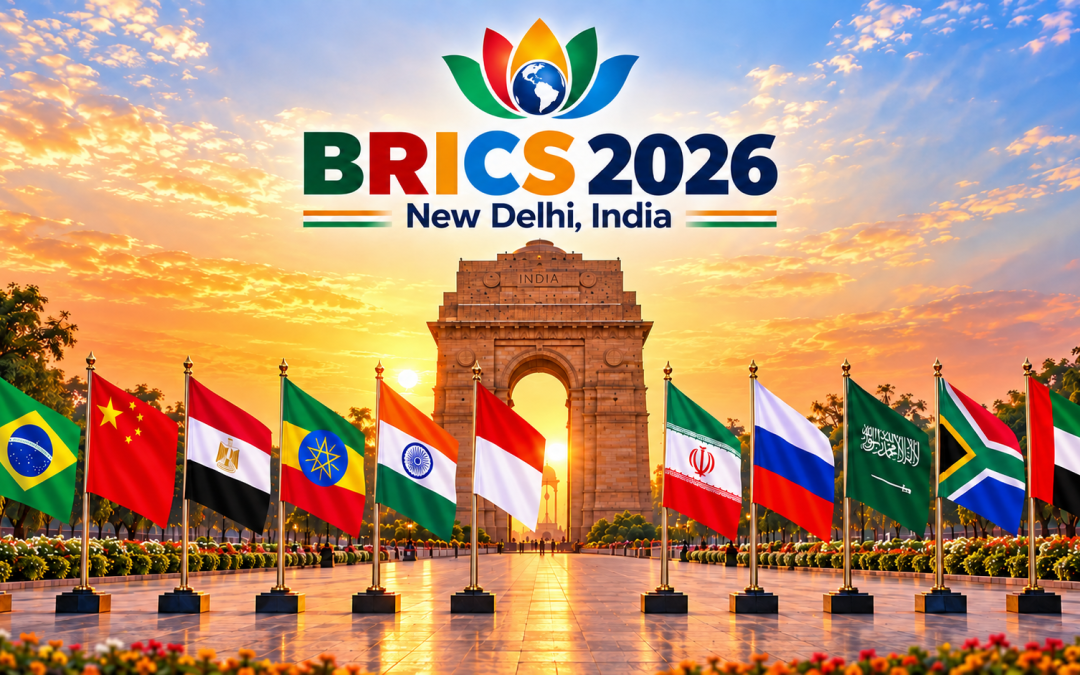
The XVIIIth BRICS Summit wrapped up on 13 September with the New Delhi Declaration, themed “Building for Resilience, Innovation, Cooperation and Sustainability.” BRICS began as BRIC, a Goldman Sachs acronym in 2001 and became a diplomatic platform at the first summit in Yekaterinburg in 2009. It now counts eleven members: the founding five (Brazil, Russia, India, China and South Africa), followed by Egypt, Ethiopia, Iran and the United Arab Emirates, Indonesia, and Saudi Arabia. Ten additional countries, including Nigeria, Vietnam, Kazakhstan, and Malaysia, attended as partner countries.
Twenty Years On: The Growth of the Bloc
BRICS turned twenty this year. By IMF estimates, the bloc now commands roughly 39.8% of global GDP in purchasing-power terms against the G7’s 27.9%, accounts for about a quarter of global trade, and represents close to half of humanity. The Declaration’s language on UN reform, IMF quota realignment and WTO revival reflected a strong rhetoric as the Global South is actively laying the groundwork to build a distinct class of decision-makers.
Over the past two decades, BRICS has evolved through clear phases:
- 2006: Officially formalized as a diplomatic and geopolitical entity on the sidelines of the UN General Assembly in New York.
- 2009: Transitioned from ministerial-level dialogues into a formal summit-level platform when the inaugural summit was held in Yekaterinburg, Russia, operating as a high-level diplomatic forum.
- 2014: Shifted to institution-building with the creation of the New Development Bank and the Contingent Reserve Arrangement.
- 2023-2025: Focused on expansion.
- 2026 (Under India’s Chairship): Evolved into a delivery-focused bloc, marked by more than four hundred meetings across thirty Indian cities and dedicated working groups.
The Submarine Cable Is the New Battleship
The Declaration officially recognised submarine cable infrastructure as an important foundation for international connectivity and network resilience. The Declaration and a dedicated Task Force concluded a “BRICS Cable Requirements: Directive Brief” and member states agreed to pursue a Technical and Economic Feasibility Study for a high-speed BRICS submarine cable network.
This initiative is vital because roughly 99% of the world’s intercontinental data travels along about 550–570 active undersea cables protected primarily by international law. In 2024, accidents and damage in the Red Sea snapped multiple cables simultaneously, disrupting traffic between Asia and Europe. This exceptionally rare incident knocked out approximately 25% of Asia-Europe-Middle East traffic and visibly degraded internet service in India. With tech giants like Google, Meta, Amazon, and Microsoft now commanding an estimated 75% of international subsea bandwidth (up from under 10% in 2010), a BRICS cable would serve as a strategic safeguard and offer sovereign fiber insurance and seabed security as shared responsibility, where cloud infrastructure is concentrated among major technology providers.
Cybersecurity and Financial Defenses
The bloc emphasized a ‘sovereign and self-reliant digital ecosystem’, to combat cybercrime, malicious software and deepfakes while urging members to ratify the UN Convention against Cybercrime. The cybersecurity agenda outlined the following measures:
- Urged members to sign and ratify the UN Convention against Cybercrime: the Russia-born treaty adopted by consensus in December 2024 and opened for signature in Hanoi last October. Only three countries have ratified it so far (Qatar, Azerbaijan, Vietnam), BRICS endorsement is meant to move the needle.
- Operationalised the BRICS Rapid Information Security Channel (BRISC): a crisis hotline for financial cyber events;
- Committed to annual BRICS cyber exercises and drills, and a central-bank capacity-building hub, to address quantum computing risks in finance; and
- Targeted the cross-border fraud factories of Southeast Asia (see also the USCC’s findings) that have targeted Indian savings accounts.
During the cybercrime Convention’s negotiations, India advocated for streamlining human-rights guardrails, thus, a sovereignty-first instinct sat beside the Declaration’s democratic multilateralism. This focus on national security and digital sovereignty is accentuated by acute domestic vulnerabilities. CERT-In handled 29.44 lakh cyber incidents in 2025 (roughly eleven attempted attacks every second) with banking, energy and transport among the most-targeted sectors.
Mobility, Aviation & Logistics
Members strongly advocated for Sustainable Aviation Fuels (SAF) and other low-carbon fuels to cut international flight emissions and proposed a new BRICS Forum on SAF for knowledge exchange and coordination between member states. As the world’s third-largest domestic aviation market, India mandated a 1% sustainable aviation fuel (SAF) blending requirement on international flights starting in 2027. SAF involves feedstock, refining, and price support, which is the type of complex technical transition in an area in which Indian industry has relevant capabilities. Furthermore, there is a clear strategic parallel in maritime transit: the Red Sea region that hosts damaged data cables also experiences vessel rerouting. When a single waterway has the potential to disrupt data and fuel supplies, infrastructure resilience transitions from a theoretical concept to national policy.
A formal ‘Logistics Supply-Chain Cooperation Framework’ was introduced with an aim to strengthen cross-border supply chains, reduce freight costs and improve interoperability and resilience among emerging markets.
What It Means for India
For Indian industry, the summit’s outcomes translate into a few clear priorities across sectors. In telecom and cloud, the upcoming feasibility study will be defining details around landing-station policies, repair capacities, and data-localization rules will determine if sovereign fiber can become a strategic asset.
In aviation and energy, Sustainable Aviation Fuel (SAF) mandates, feedstock auctions, and joint certification standards mean domestic refiners and suppliers could start to prepare early.
Within financial services, participation in the BRICS Rapid Information Security Channel, annual cyber drills, and quantum-readiness audits may become standard regulatory expectations.
Finally, for MSMEs and logistics, new invoice-discounting and credit-assessment initiatives may help ease working-capital pressures for exporters expanding across intra-BRICS trade lanes.
The Implementation Playbook
Looking ahead over the next twenty-four months, it will be interesting to see how these commitments transition into practical outcomes across several key areas. For digital infrastructure, the STI Steering Committee will table the feasibility study’s terms of reference for the subsea cable, focusing specifically on financing models and landing-station policies.
On cybersecurity, advancing the broader ratification of the cybercrime convention will require active domestic consultation with industry and civil society, alongside establishing named focal points and executing the first annual cyber exercise during China’s BRICS chairship in 2027 to test the framework’s credibility.
In transport and energy, closely tracking host institutions and pilot projects will determine whether initiatives like the sustainable aviation fuels forum translate into concrete results. Finally, ensuring institutional follow-through will be essential for Indian-authored deliverables, such as the proposed BRICS Risk Lab at GIFT City, which require active institutional backing.
Where the Baton Goes Next
To preserve and sustain the momentum, Prime Minister Modi proposed a “BRICS Continuity and Implementation Mechanism” to track progress. As China prepares to host the upcoming XIX Summit in 2027, Beijing will inherit an active workstream ranging from the cable feasibility study and payment-systems plumbing to the sustainable aviation fuels forum and AI governance statements. While international policy analysts and financial commentators note potential challenges regarding internal consensus and geopolitical rivalries, New Delhi’s successful hosting demonstrated that an expanded BRICS can effectively align on key economic and technical priorities. Thus, twenty years on, BRICS has moved beyond high-level diplomatic discussions to focus on practical redundancy and infrastructure resilience.
References
