by Zen Webnet | Oct 14, 2026 | In the news
New Delhi, 14 October 2026
By Anjali Batra
The India-UK Free Trade Agreement, officially known as the India-United Kingdom Comprehensive Economic and Trade Agreement (CETA), is a trade pact designed to boost bilateral economic ties, reduce trade barriers and double bilateral trade by 2030. The agreement was signed on 24 July 2025 and entered into force a year later, on 15 July 2026, following 14 rounds of negotiations that opened on 13 January 2022.
Negotiations concluded on 6 May 2025, and the deal was subsequently finalized under UK Prime Minister Keir Starmer, who sought a domestic economic boost, while India looked to secure a major Western trade corridor after its 2019 exit from the Regional Comprehensive Economic Partnership (RCEP). Against this backdrop, bilateral trade between India and the UK stood at £48 billion in 2025. UK government projections estimate that CETA could increase bilateral trade by up to £25.5 billion annually in the long run. The agreement also supports the movement of certain workers through the Double Contributions Convention (DCC), which prevents eligible seconded workers from paying social-security contributions in both countries.
Tariffs Cuts and Market Access Under CETA
India’s average tariff on UK goods fell from 12% to 3%; the UK’s on Indian goods, from 4% to zero. Over 99 percent of Indian exports enter duty-free from day one, including products that previously faced high UK tariffs: 12 percent on textiles, 16 percent on leather, 18 percent on engineering goods, and up to 70 percent on certain processed foods, alongside gems, jewellery, and toys. Meanwhile, sensitive agricultural products like sugar, rice, pork, chicken, and eggs remain excluded. While the agreement delivers broad commercial gains, economic modeling projects that increased competition will lead to a £114 million contraction in Gross Value Added for the UK’s domestic textiles, apparel, and leather sector over the long term.
On the Indian side, market opening is more gradual. India will remove tariffs on 90% of the products it imports from the UK, covering 92% of the value of its 2022 imports. However, the cuts are phased in: 64% of physical goods export lines become duty-free immediately (worth £1.9 billion, representing roughly 28% of total UK goods exports to India), rising to 85% over ten years. Dairy, cereals and edible oils stay outside the deal. For example, tariffs on Scotch whisky fall to 75% when the agreement begins and then to 40% by year ten.
Under the automotive tariff-rate quota framework, the number of qualifying UK-built cars permitted at concessional duties is structured to rise from 20,000 in year one to 37,000 by year five, with import tariffs eventually falling from around 110% down to 10%. However, initial implementation data reveals a much slower actual uptake: following an initial DGFT application window seeking buyers for roughly 5,000 vehicles, the government approved quotas for only 642 cars across seven eligible companies. This stark gap between formal trade allowances and modest early utilization highlights that while the FTA opens wide structural pathways for vehicle imports on paper, real-world market entry remains measured and gradual as manufacturers navigate compliance and distribution.
UK exporters would save an estimated £398 million in duties in year one, rising to £889 million by year ten. For Indian exporters, the estimate is £221 million although the actual gains may be lower because Indian exporters currently use FTA preferences on only 20-30% of eligible trade. The Global Trade Research Initiative (GTRI) notes many of these lines already carried near-zero UK duties before CETA. On day one, India ceremonially sent off 50-plus consignments worth over US$140 million as a symbolic start.
On Intellectual property & the Fine Print
Intellectual Property (IP) rules protect creations such as brand names, inventions, and designs. Chapter 13 of CETA extends UK protection to more than 600 Indian geographical indications, including Darjeeling Tea and Kolhapuri Chappals. India provides similar protection for Scotch Whisky.
On patents, India retained the flexibility provided by its existing patent law. However, the agreement expresses a preference for voluntary licensing (where a patent holder allows others to use a patent) over compulsory licensing, where a government can allow such use without the holder’s consent. Public health advocates and international policy observers have raised concerns that this language could become relevant in future disputes over generic medicines, or cheaper versions of patented drugs. However, the provision is a stated preference and does not override India’s existing patent law.
Traditional knowledge, meaning knowledge passed down within communities, receives more limited protection. The agreement protects against foreign patents being wrongly granted for knowledge that is genuinely Indian, but does not create a separate IP right for traditional knowledge. Copyright, trademarks, designs, trade secrets and enforcement are also covered. The enforcement provisions cover border measures, civil and criminal remedies, and domain-name disputes.
Movement of workers
Regarding visas, CETA also made it easier for some professionals to work in each other’s country. Intra-corporate transferees (employees moved within the same company) can stay for up to three years, with the possibility of a further two-year extension. Business visitors can stay for up to 90 days without undergoing an economic-needs test, which is a burdensome regulatory check that normally forces companies to prove that no local worker is available before hiring foreign personnel. By waiving this requirement, the agreement significantly streamlines short-term corporate mobility and professional travel. Contractual specialists (professionals hired for a specific contract) can stay for up to one year. A narrow, named-occupation route is subject to a combined annual cap of 1,800 visas shared across chefs, yoga instructors, and classical musicians. The UK Home Office and Indian visa rules still apply on top of all of these.
With respect to social security, the Double Contributions Convention (DCC) exempts seconded workers (employees temporarily transferred by their employer to work in the other country) from paying social-security contributions in both countries for up to five years. Under this arrangement, such employees keep paying into their home country’s system, such as India’s Employees’ Provident Fund or UK National Insurance, while remaining exempt from social-security contributions in the host country for up to 60 months. The DCC therefore reduces the cost of temporarily transferring employees between the two countries.
What CETA does not change
Beyond the tariff cuts, several legal and practical realities shape how CETA works in practice.
- Other taxes still apply. Zero-duty access removes only import tariffs. Domestic taxes such as GST and IGST (India’s Goods and Services Tax and its version on imports) and VAT (the UK’s value-added tax) apply in full.
- CETA has no investment chapter, meaning disputes are handled strictly between governments through the Joint Committee rather than through investor-state arbitration, which would allow a company to bring a claim directly against a government.
- Digital provisions ban governments from forcing companies to hand over software code, while still allowing rules that require data to be stored locally inside the country.
- The technical chapters encourage the use of international product standards and recognition of each other’s product testing. They do not create one common set of product rules.
- Bilateral safeguard mechanisms, which let a country temporarily raise tariffs or suspend tariff concessions when a sudden increase in imports seriously harms or threatens domestic industry, remain available.
- Mutual recognition of professional qualifications (each country accepting the other’s qualifications) for legal, accounting and architectural services remains pending, with frameworks due to be established by July 2027.
Two important UK measures also sit outside CETA but will affect Indian exporters. First, the UK’s Carbon Border Adjustment Mechanism (CBAM), which puts a price on the carbon emissions linked to certain imported goods, will apply to Indian aluminum, cement, fertilizer, hydrogen, iron, and steel exports starting 1 January 2027. However, this impact may be reduced because the UK recognizes India’s domestic carbon credit scheme, allowing exporters to claim relief by proving they already paid a carbon price at home. Second, the UK’s national steel safeguards (import limits introduced in July 2026 to protect domestic steel) sit outside the CETA framework, but a separate bilateral understanding ensures that 85 percent of Indian steel exports are exempt from these import restrictions.
Sectoral Highlights and Industrial Impact
- Manufacturing and industrial trade: India’s engineering exports to the UK, spanning machinery, electrical equipment and auto components, are positioned for substantial expansion, supported by zero-duty entry and manufacturing clusters across Tamil Nadu, Karnataka, Uttar Pradesh, Maharashtra, Gujarat and Telangana. UK machinery and aerospace exporters also gain reciprocal duty reductions.
- Technology and services: CETA sets a baseline for cross-border services and mobility. Advanced technology cooperation and high-value digital investment are being pursued separately through the UK-India Technology Security Initiative (TSI)..
- India’s wider trade strategy: CETA is India’s fifteenth bilateral trade agreement in force. It supports a strategy of building trade routes with many partners, reducing India’s exposure to shocks in any one market. The agreement is also expected to increase the long-term GDP of both economies.
- Compliance: claim zero duty, exporters must prove their goods qualify under the agreement’s rules of origin, which determine whether a product is considered to come from India or the UK. CETA uses origin self-certification, meaning the exporter declares the origin itself, through the DGFT’s e-CoO 2.0 online platform in India and HMRC (His Majesty’s Revenue and Customs, the UK tax authority) frameworks in the UK. There is a 48-hour target for customs clearance for compliant consignments, with oversight from the Joint Committee. The first certificates of origin under CETA were issued through India’s eCoO 2.0 platform on a self-certification basis.
Future Milestones and Implementation Checkpoints
Looking ahead, several critical milestones will shape the long-term performance of the trade agreement. India’s trade network extends beyond the UK, and competition from other partners will shape how much value CETA ultimately delivers. Chief among these is the anticipated early-2027 finalisation of the EU-India trade accord, which could narrow the UK’s initial first-mover advantage as India expands its network of major European trade partners.
Domestically, the pact’s success will be tested by the parallel implementation of the UK’s carbon border adjustment mechanism alongside national steel safeguards. A second test will be whether exporters actually use the preferences available under CETA: the current 20% to 30% utilisation baseline suggests that tariff concessions alone will not guarantee increased trade. On the regulatory front, the July 2027 deadline for mutual recognition frameworks for professional qualifications will provide an early test of whether the agreement can move beyond tariff liberalisation into deeper services integration. Finally, the deal’s ultimate depth depends on whether future Joint Committee sessions will revisit broader labour mobility expansions, moving beyond the current framework’s restrictive focus on short-term intra-corporate transferees, contractual service suppliers, and traditional business-visitor routes.
References
- Department for Business and Trade (DBT), “UK-India trade deal: conclusion agreement summary,” GOV.UK, published 6 May 2025, updated 15 July 2026. https://www.gov.uk/government/publications/uk-india-trade-deal-conclusion-summary/uk-india-trade-deal-conclusion-summary
- Business.gov.uk (DBT), “Historic UK-India free trade agreement is in effect,” last updated 3 August 2026. https://www.business.gov.uk/campaign/alive-with-opportunity/the-uk-india-trade-deal/
- Press Information Bureau (PIB), Ministry of Commerce and Industry, “India and the United Kingdom Unleash a Next Generation Economic Corridor: CETA and Agreement on Social Security Contributions Set to Enter into Force on 15th July 2026,” 17 June 2026. https://www.pib.gov.in/PressReleasePage.aspx?PRID=2274280®=48&lang=2
- UK Parliament, Business and Trade Committee, “UK-India Comprehensive Economic and Trade Agreement (CETA),” Twelfth Report of Session 2024–26, HC 996, 21 January 2026 (Tables 1–3, paras 21, 24–26, 32, 34, 99 and 101, Box 1 and Annexes 2–3). https://publications.parliament.uk/pa/cm5901/cmselect/cmbeis/996/report.html
- PIB, “India–UK CETA: 99% Tariff Elimination, Stronger Bilateral Trade, Catalyst for Inclusive Growth” (explainer), 27 July 2025. https://www.pib.gov.in/PressNoteDetails.aspx?ModuleId=3&NoteId=154945®=48&lang=2
- “India-UK FTA: DGFT Clears 642 Cars For Import Under 2026 Vehicle Quota,” KNN (reporting PTI), 17 September 2026. https://knnindia.co.in/news/newsdetails/sectors/exportimports/india-uk-fta-dgft-clears-642-cars-for-import-under-2026-vehicle-quota
- “India-UK CETA: India Allows 20,000 UK Cars At Concessional Duty In First Year,” BW Businessworld. https://www.businessworld.in/article/india-uk-ceta-india-allows-20-000-uk-cars-at-concessional-duty-in-first-year-614194
- Global Trade Research Initiative (GTRI), as reported in “India has 15 FTAs covering 27 nations, but most exporters aren’t using them effectively,” BusinessToday, 9 June 2026. https://www.businesstoday.in/latest/economy/story/india-has-15-ftas-covering-27-nations-but-most-exporters-arent-using-them-effectively-gtri-report-535767-2026-06-09
- PIB, “India–UK CETA and Agreement on Social Security Enter into Force,” 15 July 2026. https://www.pib.gov.in/PressReleasePage.aspx?PRID=2285085&lang=1®=3
- PIB, “Factsheet: India and European Union Trade Agreement,” January 2026. https://www.pib.gov.in/PressReleasePage.aspx?PRID=2219146®=3&lang=1
- “Commission presents landmark India trade deal to Council for signature,” EU Reporter, 14 September 2026 (reproducing the European Commission statement of 11 September 2026). https://www.eureporter.co/economy/trade-2/2026/09/14/commission-presents-landmark-india-trade-deal-to-council-for-signature/
- “India-EU FTA moves one step closer to reality as European Commission moves to get it signed,” Bytes Europe, 11 September 2026 (entry into force expected early 2027). https://www.byteseu.com/2356601/
- GTRI, as reported by PTI in “India must strengthen certification to take full advantage of UK FTA: GTRI,” Business Standard, 11 July 2026. https://www.business-standard.com/economy/news/india-must-strengthen-certification-to-take-full-advantage-of-uk-fta-gtri-126071100533_1.html
- GTRI, as reported in “India must boost certification, buyer networks to gain from UK FTA,” Daily Pioneer (processed-food figures). https://dailypioneer.com/news/india-must-boost-certification-buyer-networks-to-gain-from-uk-fta
- ICAEW, “UK-India social security agreement comes into effect,” July 2026. https://www.icaew.com/insights/tax-news/2026/jul-2026/uk-india-social-security-agreement-to-come-into-effect-soon
- UK Government, Exchange of Letters on the Double Contributions Convention, 24 July 2025 (TS 52.2025). https://assets.publishing.service.gov.uk/media/68b1c240b0a373a01819fc7e/TS_52.2025_Exchange_of_Letters_Double_Contributions_Convention_India_Trade_Agreement.pdf
- WTW, “United Kingdom: Social security agreement with India,” March 2026. https://www.wtwco.com/en-gb/insights/2026/03/united-kingdom-social-security-agreement-with-india
- KPMG, GMS Flash Alert 2026-134, “United Kingdom – Clarifications on Social Security Agreement with Republic of India,” 1 June 2026. https://kpmg.com/xx/en/our-insights/gms-flash-alert/2026/flash-alert-2026-134.html
- Government of India, “India-UK CETA Rules of Origin: Frequently Asked Questions.” https://www.nsez.gov.in/Resources/Trade/FAQs%20ROO.pdf
- Deloitte, “Carbon Border Adjustment Mechanism” (Autumn Budget 2025 measure: UK CBAM from 1 January 2027). https://taxscape.deloitte.com/measures-autumn-budget-2025/carbon-border-adjustment-mechanism.aspx
- “UK CBAM Explained: India’s Carbon Market Wins Recognition,” Open, 8 September 2026. https://openthemagazine.com/business/uk-cbam-explained-indias-carbon-market-wins-recognition-will-exporters-escape-britains-carbon-tax
- TaxGuru (reproducing an EEPC India-linked industry report), “India–UK CETA: Strengthening Bilateral Trade and Investment.” https://taxguru.in/finance/india-uk-ceta-strengthening-bilateral-trade-investment.html
- Mondaq, “Decoding The India–UK CETA: An Overview Of Trade, Services And Compliances” (investment chapter, Chapters 5 and 7). https://www.mondaq.com/india/international-trade-investment/1681222/decoding-the-indiauk-ceta-an-overview-of-trade-services-and-compliances
- GOV.UK, “UK-India CETA Chapter 12: Digital Trade (web version).” https://www.gov.uk/government/publications/uk-india-ceta-chapter-12-digital-trade/chapter-12-digital-trade-web-version
- Mondaq, “Professional Services Under India-UK FTA: Key Takeaways” (ICT, CSS and business-visitor mobility terms). https://www.mondaq.com/india/international-trade-investment/1824006/professional-services-under-india-uk-fta-key-takeaways
- High Commission of India, London, “Technology Security Initiative (TSI).” https://www.hcilondon.gov.in/page/technology-security-initiative-tsi/
- “India–UK CETA to accelerate industrial growth, investment and manufacturing: NICDC,” India Shipping News. https://indiashippingnews.com/global-trade/india-uk-ceta-to-accelerate-industrial-growth-investment-and-manufacturing-nicdc/
- Business.gov.uk, “Rules of origin in India.” https://www.business.gov.uk/export-from-uk/markets/india/trade-agreement/rules-of-origin-in-india/
- Mondaq, “Decoding The India–UK CETA” (Chapter 13, IP: geographical indications, patents, traditional knowledge, enforcement). https://www.mondaq.com/india/international-trade-investment/1681222/decoding-the-indiauk-ceta-an-overview-of-trade-services-and-compliances
- Knowledge Ecology International (KEI) / Third World Network, commentary on India-UK CETA IP chapter and voluntary licensing. https://www.keionline.org/uk-india-fta
- UK Government, “India-UK Vision 2035” framework document, 24 July 2025. https://assets.publishing.service.gov.uk/media/6883607bdd3822343e58af0c/india-uk-vision-2035.pdf
by Zen Webnet | Oct 14, 2026 | BLOG, In the news
New Delhi, 14 October 2026
By Anjali Batra
The general debate of the 81st United Nations General Assembly (UNGA) session concluded on 28 September 2026. As the international community navigates an increasingly complex global landscape, multilateral platforms remain essential for addressing transnational challenges. India’s engagement with these frameworks is deeply rooted. Having signed the UN Charter in June 1945 as one of its initial 51 members, India has since built a robust legacy of active participation. Marking a continuation of this steady diplomatic footprint, this session represented External Affairs Minister S. Jaishankar’s fifth consecutive year leading India’s delegation. Building upon its historical standing, including eight terms as a non-permanent Security Council member and extensive contributions to global peace, India utilized the 81st UNGA to advance its strategic priorities.
India formally launched its candidature for a non-permanent seat on the Security Council (UNSC) for the 2028-29 term on 13 July 2026. India continues to call for structural reform through the expansion of the Council in both the permanent and non-permanent categories, while seeking election to a non-permanent seat for 2028-29. This dual-track approach of seeking a near-term seat while advocating longer-term structural reform builds directly on India’s longstanding engagement with the UN system.
India’s Membership and Multilateral Engagement Since 1945
India signed the UN Charter in June 1945 as one of its initial 51 members. It has been elected by the General Assembly eight times to serve a two-year term as a non-permanent member of the Security Council, most recently in 2021-22. It has also engaged in multilateralism through counter-terrorism, climate frameworks and the G4 (Brazil, Germany, India and Japan). This institutional experience has given India both a record of participation in the UN system and a platform from which to argue that its present-day structures no longer reflect contemporary geopolitical realities.
Geopolitical Strain and Leadership Transition
The session convened amid heavy geopolitical strain, including the Russia-Ukraine conflict, the Israel-Gaza war and the months-long US-Israel war against Iran, whose disruption of the Strait of Hormuz has pushed up food and fuel costs across the Global South. Against the backdrop of a record 65 conflicts in 2025, the Secretariat faces a leadership transition as Secretary-General António Guterres’s term ends on 31 December 2026. Momentum is building behind candidates for the UN’s first woman Secretary-General, including Costa Rica’s Rebeca Grynspan and Guyana’s Carolyn Rodrigues Birkett. A leadership change at this level could reshape the Secretariat’s priorities in ways that affect how member states, including India, pursue reform and influence outcomes. These pressures have reinforced the case for a more representative and effective multilateral system, providing the broader context for India’s priorities at the 81st session.
India’s Priorities at the 81st Session
On the sidelines of the session, Jaishankar took part in an India–UAE–France trilateral meeting and a meeting of the G4 foreign ministers, which discussed reformed multilateralism and a more representative Security Council. India’s engagements covered four themes: Council reform with Global South solidarity; technology governance; development finance amid the “four Fs” crisis of fuel, food, fertiliser and finance; and India’s positions on Ukraine, the Gulf and counter-terrorism. Taken together, these engagements show that India’s multilateral agenda extends beyond Council reform to a broader effort to shape rules and institutions in areas affecting the Global South.
On technology, the AI Impact Summit held in New Delhi in February 2026, the first in its series hosted by a Global South country, produced the non-binding New Delhi Declaration on AI Impact, endorsed by 91 countries and international organisations. In his General Assembly address, Jaishankar referred to the Summit and said that AI would be part of India’s partnership agenda with the Global South. While no General Assembly decision on the Declaration has been reported yet, the UN’s own AI track continues separately. The Global Dialogue on AI Governance, launched by the General Assembly, held its inaugural meeting in July 2026, and its second session is scheduled for 3-4 May 2027 in New York.
Security Council Reform and Coalition Complexities
Council reform remains central to India’s multilateral agenda, yet structural obstacles persist. The Intergovernmental Negotiations (IGN) remain the only UN process without a formal negotiating text or deadline, and a Ministry of External Affairs briefing note conceded that the 80th session produced no concrete outcome. Without a negotiating text to rally around, India and the G4 must instead build consensus across loosely aligned coalitions. Beyond procedural delays, India and the G4 (Brazil, Germany, Japan) face massive diplomatic roadblocks: they must align their proposals with the L.69 Group (a coalition of developing nations pushing for broader representation) and the Africa Group, both of which share general reform goals but disagree fiercely on seat distribution and veto powers.
At the same time, they must fight off the “Coffee Club” (formally known as Uniting for Consensus), a rival bloc led by countries like Italy and Pakistan that completely opposes adding any new permanent seats. Meanwhile, the permanent five members of the UN Security Council are deeply divided: France and the UK support expansion, and the United States backs permanent seats for India, Germany, and Japan while withholding support for new veto powers. Because any change requires a grueling two-thirds General Assembly vote plus ratification by two-thirds of member states (including all five permanent members), India’s biggest challenge is building a massive, fragile coalition capable of bridging competing global ambitions. While recent backing from Russia offers a strategic boost, it simultaneously complicates the delicate diplomatic balancing act required to get everyone to agree.
Russia Supports Permanent Seats for India and Brazil
Russian Foreign Minister Sergey Lavrov’s 26 September 2026 General Assembly address highlighted a major diplomatic tightrope for New Delhi: while both the United States and Russia support India securing a permanent seat on the UN Security Council, they completely disagree on who else should join. The United States backs permanent seats for India alongside its G4 partners Germany and Japan, whereas Russia explicitly backs India alongside Brazil while firmly opposing the inclusion of countries like Germany and Japan. This creates a delicate balancing act for India, as its strongest strategic partners hold directly contradictory models of reform.
India’s Contribution to UN Peacekeeping
Alongside diplomatic advocacy, India has another source of credibility in the UN system: its longstanding contribution to peacekeeping. More than 290,000 personnel have served in over 50 peacekeeping missions since the 1950s. In a written reply to the Lok Sabha on 31 July 2026, the External Affairs Minister stated that about 4,200 Indian peacekeepers were then deployed in nine of the 11 active UN missions. In 2007, India fielded the UN’s first all-women Formed Police Unit in Liberia.
On women’s participation, India’s Permanent Representative told the Security Council’s open debate on Women, Peace and Security in June 2026 that more than 160 Indian women peacekeepers were serving in UN missions, including all-women Female Engagement Teams. The UN’s uniformed gender parity strategy sets a target of 15 percent women in military contingents by 2028. This record strengthens India’s argument that its claim to a greater role should be assessed not only in terms of geopolitical weight, but also through its practical contributions to the UN’s peace and security architecture.
India’s Engagement with the Global South and Voting Record
India uses the Assembly to convert Global South priorities into working frameworks. At the “Partners for Multilateralism” summit, it argued for coordinated AI risk governance and protected energy and food supply chains, working through the International Solar Alliance and the Global Biofuels Alliance.
On 24 February 2026, India abstained on “Support for Lasting Peace in Ukraine” (107 in favour, 12 against and 51 abstentions), alongside Brazil, China, South Africa and the United States. On the Gaza conflict, India had backed UN ceasefire resolutions in late 2023 and 2024, but shifted to an abstention in June 2025 on a resolution that ultimately passed with overwhelming support (149 countries voting in favor, 12 against, and others abstaining). New Delhi explained that while it remains deeply concerned by the humanitarian crisis, it abstained because the text lacked balanced accountability and direct diplomatic frameworks, maintaining that sustainable peace can only be achieved through direct dialogue and diplomacy.
India’s Right of Reply at the General Assembly
This combination of coalition-building, issue-based engagement and strategic autonomy was also visible in India’s exchanges with Pakistan during the General Assembly. India exercised its Right of Reply on 25 September after Pakistan raised Kashmir, the Indus Waters Treaty and claims regarding foreign mediation in its General Assembly address. First Secretary Petal Gahlot replied on behalf of India’s delegation. The Right of Reply is the procedure that allows a member state to respond to remarks made about it in the General Assembly. While procedurally routine, the exchange illustrates how bilateral disputes continue to intersect with India’s broader multilateral diplomacy.
Next Steps Through 2028
The next two years will test whether convening power yields outcomes. Three major milestones will shape this stretch. First, winning the well-contested June 2027 General Assembly election for the 2028-29 Security Council non-permanent seat against Tajikistan (which holds a vital Organisation of Islamic Cooperation endorsement, though India has secured early backing from key partners like the US, Austria, Sri Lanka, and Fiji); second, breaking decades of gridlock by forcing the Intergovernmental Negotiations (IGN) to finally adopt a formal, text-based negotiation document instead of endless open-ended talk; and third, successfully winning election seats across five other vital UN bodies to expand institutional footprint. Passing the June 2027 vote requires securing a demanding two-thirds majority of the General Assembly, making it a crucial test of whether a 1945-designed global architecture can accommodate a multipolar world.
India’s approach continues to rely on coalition-building, practical standard-setting and gradual integration. Whether an architecture designed in 1945 can accommodate a multipolar world remains the open question, with India’s campaign providing a useful test of that proposition.
References
United Nations, Department for General Assembly and Conference Management, “Heads of Permanent Missions to the United Nations.” https://www.un.org/dgacm/sites/www.un.org.dgacm/files/Documents_Protocol/headsofmissions.pdf
India Today, “S Jaishankar’s UNGA meetings: UN reform, AI, space, bilateral ties,” 23 September 2026. https://www.indiatoday.in/world/story/s-jaishankar-unga-meetings-un-reform-ai-space-bilateral-ties-ptag-3001228-2026-09-23
WION, “Jaishankar at UNGA: India pushes for reformed multilateralism, reforms to global institutions.” https://www.wionews.com/india-news/jaishankar-at-unga-india-pushes-for-reformed-multilateralism-reforms-to-global-institutions-1790046860281
India TV News, “Global order under stress: Jaishankar calls for stronger multilateralism at UNGA summit,” 22 September 2026. https://www.indiatvnews.com/news/world/global-order-under-stress-jaishankar-calls-for-stronger-multilateralism-at-unga-summit-2026-09-22-1054880
K.P. Nayar, “India’s UNGA story | From Rao-Vajpayee consensus to Modi-Jaishankar pattern,” Deccan Herald, 25 September 2026. https://www.deccanherald.com/opinion/indias-unga-story-from-rao-vajpayee-consensus-to-modi-jaishankar-pattern-4159181
Ministry of External Affairs, Government of India, “Visit of EAM Dr. S. Jaishankar to New York, USA for the High Level Week at the 81st Session of the United Nations General Assembly,” Press Release. https://www.mea.gov.in/press-releases?dtl/41809
Press Information Bureau, Government of India, document on India’s contribution to UN peacekeeping, March 2025. https://static.pib.gov.in/WriteReadData/specificdocs/documents/2025/mar/doc202539516101.pdf
All India Radio (newsonair), “India consistently supports UN in strengthening international peace and security: EAM in LS” (written reply of the External Affairs Minister, Lok Sabha), 31 July 2026. https://newsonair.gov.in/india-consistently-supports-un-in-strengthening-international-peace-and-security-eam-in-ls/
Zee News / ANI, “Global order under stress, multilateralism must assert itself strongly: Jaishankar at inaugural UNGA ‘Partners for Multilateralism’ Summit,” 22 September 2026. https://zeenews.india.com/india/global-order-under-stress-multilateralism-must-assert-itself-strongly-jaishankar-at-unga-summit-3072664.html
Dhruva Jaishankar and Medha Prasanna, “The Urgent Need for UN Security Council Reform,” ORF America, 2025. https://orfamerica.org/orf-america-comments/the-urgent-need-for-un-security-council-reform
Harsh V. Pant, “India’s UNSC moment,” Observer Research Foundation, 27 May 2026. https://www.orfonline.org/research/indias-unsc-moment
The Tribune, “India hits back at Pakistan at UN, says terrorism, ‘duplicity’ will have consequences,” 26 September 2026. https://www.tribuneindia.com/news/india/india-hits-back-at-pakistan-at-un-says-terrorism-duplicity-will-have-consequences/
Outlook India, “Who Is Petal Gahlot?,” September 2026 (Right of Reply, 25 September 2026). https://www.outlookindia.com/national/who-is-petal-gahlot-meet-the-indian-diplomat-who-took-on-pakistan-at-unga
Gateway House, “India bids for UNSC,” August 2026. https://www.gatewayhouse.in/india-bids-for-unsc/
StratNews Global, “India, Tajikistan Face Off in UNSC Race,” July 2026. https://stratnewsglobal.com/united-nations/india-tajikistan-face-off-in-unsc-race/
India’s World, “India’s Bid for a Non-Permanent UN Security Council Seat (2028-29): An Explainer,” July 2026. https://indiasworld.in/indias-bid-for-a-unsc-seat-2028-29-an-explainer/
Security Council Report, “First Security Council Straw Poll on UN Secretary-General Candidates,” July 2026. https://www.securitycouncilreport.org/whatsinblue/2026/07/first-security-council-straw-poll-on-un-secretary-general-candidates.php
1 for 8 Billion, “Straw Polls 2026.” https://1for8billion.org/straw-polls-2026
Business Today, “UNSC reform: Russia backs India’s seat bid, demands end to Western dominance,” 27 September 2026. https://www.businesstoday.in/india/story/unsc-reform-russia-backs-indias-seat-bid-demands-end-to-western-dominance-558078-2026-09-27
All India Radio (newsonair), “India-AI Impact Summit concludes with adoption of New Delhi Declaration,” 21 February 2026. https://www.newsonair.gov.in/india-ai-impact-summit-2026-adopts-new-delhi-declaration
by Zen Webnet | Sep 30, 2026 | In the news
By Tushar Gandhi and Anjali Batra
On 22 September 2026, the U.S. Grains & BioProducts Council (USGBC) and the U.S.-India Strategic Partnership Forum (USISPF) convened the U.S.-India Biofuels Summit 2026 in New Delhi. Building on earlier discussions around ethanol blending and feedstock diversification, the summit placed biofuels within a wider policy frame of energy security, rural value creation, industrial competitiveness, and hard-to-abate decarbonisation. India’s ethanol ecosystem is now being assessed not only by its ability to meet fuel blending targets but also by its capacity to support the country’s wider energy needs in sectors such as aviation, clean cooking, and maritime operations. Taking the discussion forward from its inaugural edition in 2024, which identified applications in sustainable aviation fuel (SAF) and clean cooking, this year’s dialogue focused on bringing stakeholders together to discuss implementation roadmaps.
India’s Ethanol Blending Programme (EBP) has created the underlying production, storage, and distribution foundation for this next phase. Blending rates surged from a modest 0.6 percent in 2012–13 to 10 percent in 2022, culminating in the nationwide rollout and consistent 20 percent blending (E20) by 2026. Backing this transformation is an installed distillation capacity of 24 billion litres, producing nearly 20 billion litres of ethanol annually. With E20 fuel blending absorbing approximately 12 to 13 billion litres, India now possesses a domestic surplus for other applications. The policy challenge is therefore shifting from building capacity to directing available resources towards applications that provide the greatest combination of energy security and carbon emission reductions.
Beyond surface transport, SAF emerged as a central pillar of the summit’s agenda. India is currently the world’s third-largest domestic aviation market, with fleet and passenger traffic expected to roughly quadruple by 2040. As international aviation faces progressively stronger carbon-accounting and fuel-intensity requirements, SAF is becoming a strategic issue for airlines, refiners, airports, and fuel suppliers rather than a niche climate intervention. To meet impending decarbonisation mandates, India is uniquely positioned to pursue the Alcohol-to-Jet (ATJ) pathway, capitalising on its domestic ethanol surplus. Representatives from the aviation industry at the summit showcased significant technical milestones, including recent successful SAF demonstration flights conducted with Indian carriers and research institutions. However, bridging the capital expenditure hurdle—with a domestic ATJ facility requiring around ₹3,500 crore—and aligning with international carbon-accounting standards will be vital to making commercial SAF supply cost-competitive by the end of the decade.
Building on these themes, a dedicated panel co-convened by the Global Biofuels Alliance (GBA) focused on the alternative and viable utilisation of surplus domestic ethanol as an immediate, transformative opportunity in the clean cooking segment. With volatile international energy markets continuing to disrupt imported commercial LPG supplies, ethanol provides a reliable, domestically refined solution. Global deployment models, particularly across East Africa, successfully demonstrated the commercial appeal of this fuel. In countries like Kenya and Uganda, early ethanol distribution networks rapidly scaled to over a million households by offering a clean alternative up to 40 percent cheaper than traditional charcoal.
India’s superior distillery infrastructure and extensive oil marketing distribution reach give it a structural advantage to implement bioethanol cooking on a national scale. Transitioning commercial kitchens, street vendors, and institutional canteens to ethanol insulates businesses from import shocks. Furthermore, creating a fuel-agnostic clean cooking policy framework would unlock affordable clean cooking for low-income and migrant households while generating assured demand for domestic farmers.
The summit also turned its attention to a new frontier – Sustainable Marine Fuel. The International Maritime Organization (IMO) has introduced its Net-Zero Framework, mandating stringent Greenhouse Gas Fuel Intensity benchmarks for large vessels starting in the coming years. With alternative fuels currently making up barely 2 percent of the global marine mix, ethanol is emerging as a practical, high-volume alternative to help ship operators comply with international emission norms. Backed by significant funding allocations under the Maritime India Vision 2030 and Amrit Kaal Vision 2047, India has an opportunity to develop green bunkering and alternative fuel logistics across its primary ports.
Ultimately, the U.S.-India Biofuels Summit 2026 underscored that India has moved past the stage of proving whether ethanol works. With world-class distillation capacity in place and proven technology across aviation, cooking, and marine transport, the focus now pivots to decisive policy execution. By formalising regulatory frameworks and enabling cross-sectoral adoption, India is well-positioned to accelerate its transition into a global clean energy powerhouse.
by Zen Webnet | Sep 18, 2026 | BLOG, In the news
New Delhi, 18 September 2026
By Anjali Batra
The XVIIIth BRICS Summit wrapped up on 13 September with the New Delhi Declaration, themed “Building for Resilience, Innovation, Cooperation and Sustainability.” BRICS began as BRIC, a Goldman Sachs acronym in 2001 and became a diplomatic platform at the first summit in Yekaterinburg in 2009. It now counts eleven members: the founding five (Brazil, Russia, India, China and South Africa), followed by Egypt, Ethiopia, Iran and the United Arab Emirates, Indonesia, and Saudi Arabia. Ten additional countries, including Nigeria, Vietnam, Kazakhstan, and Malaysia, attended as partner countries.
Twenty Years On: The Growth of the Bloc
BRICS turned twenty this year. By IMF estimates, the bloc now commands roughly 39.8% of global GDP in purchasing-power terms against the G7’s 27.9%, accounts for about a quarter of global trade, and represents close to half of humanity. The Declaration’s language on UN reform, IMF quota realignment and WTO revival reflected a strong rhetoric as the Global South is actively laying the groundwork to build a distinct class of decision-makers.
Over the past two decades, BRICS has evolved through clear phases:
- 2006: Officially formalized as a diplomatic and geopolitical entity on the sidelines of the UN General Assembly in New York.
- 2009: Transitioned from ministerial-level dialogues into a formal summit-level platform when the inaugural summit was held in Yekaterinburg, Russia, operating as a high-level diplomatic forum.
- 2014: Shifted to institution-building with the creation of the New Development Bank and the Contingent Reserve Arrangement.
- 2023-2025: Focused on expansion.
- 2026 (Under India’s Chairship): Evolved into a delivery-focused bloc, marked by more than four hundred meetings across thirty Indian cities and dedicated working groups.
The Submarine Cable Is the New Battleship
The Declaration officially recognised submarine cable infrastructure as an important foundation for international connectivity and network resilience. The Declaration and a dedicated Task Force concluded a “BRICS Cable Requirements: Directive Brief” and member states agreed to pursue a Technical and Economic Feasibility Study for a high-speed BRICS submarine cable network.
This initiative is vital because roughly 99% of the world’s intercontinental data travels along about 550–570 active undersea cables protected primarily by international law. In 2024, accidents and damage in the Red Sea snapped multiple cables simultaneously, disrupting traffic between Asia and Europe. This exceptionally rare incident knocked out approximately 25% of Asia-Europe-Middle East traffic and visibly degraded internet service in India. With tech giants like Google, Meta, Amazon, and Microsoft now commanding an estimated 75% of international subsea bandwidth (up from under 10% in 2010), a BRICS cable would serve as a strategic safeguard and offer sovereign fiber insurance and seabed security as shared responsibility, where cloud infrastructure is concentrated among major technology providers.
Cybersecurity and Financial Defenses
The bloc emphasized a ‘sovereign and self-reliant digital ecosystem’, to combat cybercrime, malicious software and deepfakes while urging members to ratify the UN Convention against Cybercrime. The cybersecurity agenda outlined the following measures:
- Urged members to sign and ratify the UN Convention against Cybercrime: the Russia-born treaty adopted by consensus in December 2024 and opened for signature in Hanoi last October. Only three countries have ratified it so far (Qatar, Azerbaijan, Vietnam), BRICS endorsement is meant to move the needle.
- Operationalised the BRICS Rapid Information Security Channel (BRISC): a crisis hotline for financial cyber events;
- Committed to annual BRICS cyber exercises and drills, and a central-bank capacity-building hub, to address quantum computing risks in finance; and
- Targeted the cross-border fraud factories of Southeast Asia (see also the USCC’s findings) that have targeted Indian savings accounts.
During the cybercrime Convention’s negotiations, India advocated for streamlining human-rights guardrails, thus, a sovereignty-first instinct sat beside the Declaration’s democratic multilateralism. This focus on national security and digital sovereignty is accentuated by acute domestic vulnerabilities. CERT-In handled 29.44 lakh cyber incidents in 2025 (roughly eleven attempted attacks every second) with banking, energy and transport among the most-targeted sectors.
Mobility, Aviation & Logistics
Members strongly advocated for Sustainable Aviation Fuels (SAF) and other low-carbon fuels to cut international flight emissions and proposed a new BRICS Forum on SAF for knowledge exchange and coordination between member states. As the world’s third-largest domestic aviation market, India mandated a 1% sustainable aviation fuel (SAF) blending requirement on international flights starting in 2027. SAF involves feedstock, refining, and price support, which is the type of complex technical transition in an area in which Indian industry has relevant capabilities. Furthermore, there is a clear strategic parallel in maritime transit: the Red Sea region that hosts damaged data cables also experiences vessel rerouting. When a single waterway has the potential to disrupt data and fuel supplies, infrastructure resilience transitions from a theoretical concept to national policy.
A formal ‘Logistics Supply-Chain Cooperation Framework’ was introduced with an aim to strengthen cross-border supply chains, reduce freight costs and improve interoperability and resilience among emerging markets.
What It Means for India
For Indian industry, the summit’s outcomes translate into a few clear priorities across sectors. In telecom and cloud, the upcoming feasibility study will be defining details around landing-station policies, repair capacities, and data-localization rules will determine if sovereign fiber can become a strategic asset.
In aviation and energy, Sustainable Aviation Fuel (SAF) mandates, feedstock auctions, and joint certification standards mean domestic refiners and suppliers could start to prepare early.
Within financial services, participation in the BRICS Rapid Information Security Channel, annual cyber drills, and quantum-readiness audits may become standard regulatory expectations.
Finally, for MSMEs and logistics, new invoice-discounting and credit-assessment initiatives may help ease working-capital pressures for exporters expanding across intra-BRICS trade lanes.
The Implementation Playbook
Looking ahead over the next twenty-four months, it will be interesting to see how these commitments transition into practical outcomes across several key areas. For digital infrastructure, the STI Steering Committee will table the feasibility study’s terms of reference for the subsea cable, focusing specifically on financing models and landing-station policies.
On cybersecurity, advancing the broader ratification of the cybercrime convention will require active domestic consultation with industry and civil society, alongside establishing named focal points and executing the first annual cyber exercise during China’s BRICS chairship in 2027 to test the framework’s credibility.
In transport and energy, closely tracking host institutions and pilot projects will determine whether initiatives like the sustainable aviation fuels forum translate into concrete results. Finally, ensuring institutional follow-through will be essential for Indian-authored deliverables, such as the proposed BRICS Risk Lab at GIFT City, which require active institutional backing.
Where the Baton Goes Next
To preserve and sustain the momentum, Prime Minister Modi proposed a “BRICS Continuity and Implementation Mechanism” to track progress. As China prepares to host the upcoming XIX Summit in 2027, Beijing will inherit an active workstream ranging from the cable feasibility study and payment-systems plumbing to the sustainable aviation fuels forum and AI governance statements. While international policy analysts and financial commentators note potential challenges regarding internal consensus and geopolitical rivalries, New Delhi’s successful hosting demonstrated that an expanded BRICS can effectively align on key economic and technical priorities. Thus, twenty years on, BRICS has moved beyond high-level diplomatic discussions to focus on practical redundancy and infrastructure resilience.
References
by Zen Webnet | Jul 21, 2026 | BLOG, In the news
New Delhi, 21 July 2026
By Teekshna Singh
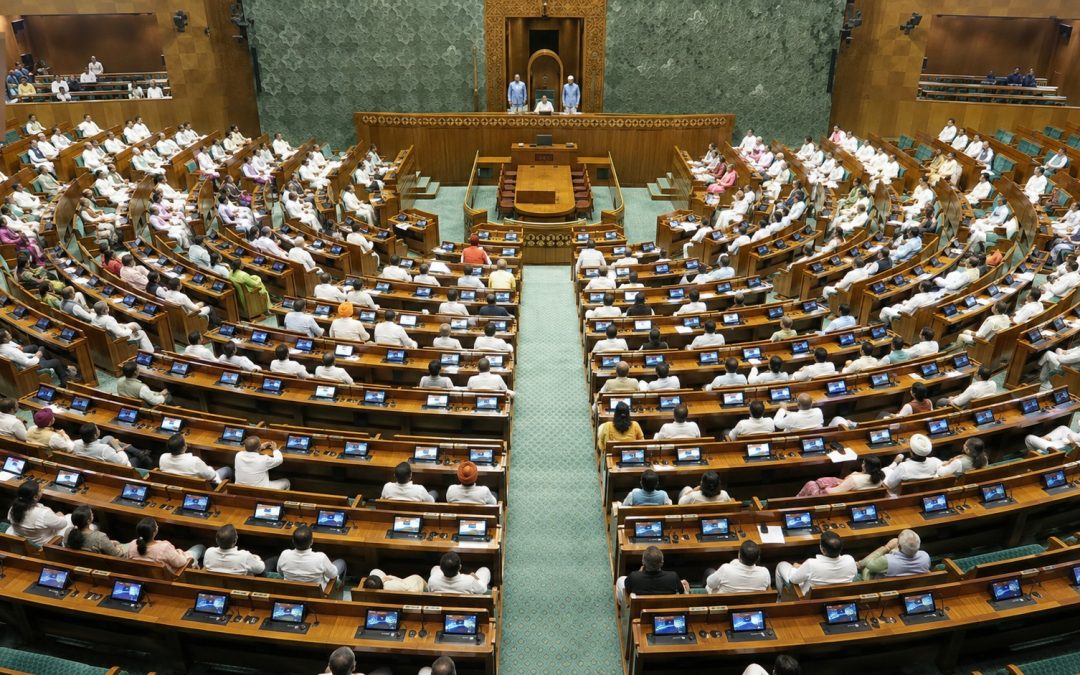
The Monsoon Session of Parliament commenced on July 20, 2026, and will continue until August 13, 2026, providing lawmakers with four weeks and 19 sittings to consider a wide-ranging legislative agenda. As one of the three annual sessions of Parliament, alongside the Budget and Winter Sessions, the Monsoon Session serves as a key platform for the introduction, debate, and passage of legislation.
Ahead of the commencement of the session, Prime Minister Narendra Modi called upon all political parties to ensure a productive session focused on legislative business and public welfare. However, proceedings in both Houses witnessed repeated disruptions on the opening day as Opposition parties sought discussions on issues including NEET, the Ram Mandir donation controversy, and other matters of public importance.
The government has prioritised the introduction and consideration of several significant Bills during the session while also preparing to deliberate on broader governance and policy issues expected to feature prominently in parliamentary discussions.
Legislative Agenda
At the start of the session, 28 Bills are pending before Parliament. Of these, the government has identified seven priority Bills, comprising five new legislations and two Bills carried over from previous sessions.
The Income Tax (Amendment) Bill, 2026 seeks to replace an ordinance exempting foreign investors from paying tax on interest and capital gains earned through investments in government securities. The proposed legislation also extends these exemptions to the Bank for International Settlements (BIS) and aims to attract foreign capital, strengthening India’s bond market, and improving financial stability amid global economic uncertainty.
The Supreme Court (Number of Judges) Amendment Bill, 2026 proposes to replace the ordinance issued in May 2026 that increased the sanctioned strength of the Supreme Court from 34 to 38 judges, including the Chief Justice of India. The amendment seeks to enhance the Court’s capacity to address its growing caseload.
The Registration of Births and Deaths (Amendment) Bill, 2026 proposes to modernise and digitise the country’s civil registration framework by streamlining the process for recording births and deaths.
The Prevention of Insults to National Honour (Amendment) Bill, 2026 seeks to amend the 1971 Act by extending legal protection currently available to the National Anthem to the National Song, Vande Mataram. The Bill proposes that insulting or intentionally obstructing the singing of the National Song would constitute an offence punishable with imprisonment of up to three years, a fine, or both.
The Micro, Small and Medium Enterprises Development (Amendment) Bill, 2026 aims to update the 2006 MSME law to reflect the contemporary business environment. It seeks to strengthen the mechanism for addressing delayed payments to small businesses, facilitate the enforcement of arbitration awards, and provide States with greater flexibility in establishing Facilitation Councils, with the broader objective of improving the ease of doing business for MSMEs.
The Foreign Contribution (Regulation) Amendment Bill, 2026 introduces provisions governing the handling and management of foreign funds and assets held by organisations whose FCRA registrations have been cancelled. It also proposes reducing the maximum imprisonment for certain violations from five years to one year.
The Viksit Bharat Shiksha Adhishthan Bill, 2025, which was introduced during the Winter Session and later referred to a Joint Parliamentary Committee, proposes the creation of a unified higher education regulator by merging the University Grants Commission (UGC), the All India Council for Technical Education (AICTE), and the National Council for Teacher Education (NCTE).
Constitutional Amendment
Apart from the legislative agenda, Parliament is also expected to deliberate on the 130th Constitution Amendment Bill, which has attracted considerable attention. The proposed amendment provides for the automatic removal of a Prime Minister, Chief Minister, or Minister who remains under judicial custody for 30 consecutive days. A Joint Parliamentary Committee met on July 17 to finalise its report ahead of the Monsoon Session, paving the way for further parliamentary consideration. However, the government has yet to confirm whether a revised version of the Bill will be introduced during the upcoming session.
Parliamentary Priorities
An all-party meeting was convened ahead of the session to discuss the government’s legislative programme and facilitate coordination among political parties. Alongside the introduction and passage of Bills, the session is expected to witness discussions on governance, judicial reforms, education policy, taxation, economic development, and constitutional accountability.
With 19 sittings scheduled over four weeks, the Monsoon Session 2026 is expected to serve as an important platform for legislative action and political debate. The fate of several key Bills, along with the proposed constitutional amendment, will depend on parliamentary deliberations and consensus across both Houses during the course of the session.
